Tuesday, 29 January 2013

"Soon after the fall of Ava, a new dynasty rose in Shwebo to challenge the authority of Hanthawaddy."

0 comments
"Over the next 70 years, the highly militaristic Konbaung dynasty went on to create the largest Burmese empire, second only to the empire of Bayinnaung."

Empires and dynasties galore in the history of Burma, our "History of" country today.
Read more ►

Monday, 28 January 2013

"From medieval times until the end of the 19th century, the region of Burkina Faso was ruled by the empire-building Mossi people..."

0 comments
"... who are believed to have come up to their present location from northern Ghana, where the ethnically-related Dagomba people still live. For several centuries, Mossi peasants were both farmers and soldiers; as the Mossi Kingdoms successfully defended their territory, indigenous religious beliefs, and social structure against forcible attempts to conquer or convert them to Islam by Muslim peoples from the northwest."

Burkina Faso is today's "History of" country.


More recently, children of the 1983-1987 revolution: 

Read more ►

Sunday, 27 January 2013

"Under Boris I, Bulgarians became Christians..."

0 comments


"... and the Ecumenical Patriarch agreed to allow an autonomous Bulgarian Archbishop at Pliska. Missionaries from Constantinople, Cyril and Methodius..."


"... devised the Glagolitic alphabet, which was adopted in the Bulgarian Empire around 886.... In the early 9th century, a new alphabet — Cyrillic — was developed at the Preslav Literary School, adapted from the Glagolitic alphabet invented by Saints Cyril and Methodius...."

In Bulgaria, today's "History of" country.
In the following centuries Bulgaria established itself as a powerful empire, dominating the Balkans through its aggressive military traditions, which led to development of distinct ethnic identity. Its ethnically and culturally diverse people united under a common religion, language and alphabet which formed and preserved the Bulgarian national consciousness despite foreign invasions and influences.
Read more ►

Saturday, 26 January 2013

"According to... Brunei's national epic poem, the present-day sultanate originated when Dewa Emas Kayangan descended to earth from heaven in an egg."

0 comments
"He had children with a number of aboriginal maidens, and one of these children converted to Islam and became the first sultan. However, the state continued to be multicultural. The second sultan was either Chinese or married a Chinese woman. The third sultan was said to be part Arab, who are seen in South and Southeast Asia as the descendents of Muhammad.... The sultanate was a thalassocracy, a realm based on controlling trade rather than land. Situated in a strategic location between China and the trading networks of southeast Asia, the state served as an entrepôt and collected tolls on water traffic."

Brunei is today's "History of" country.

Today's vocabulary words are:  thalassocracy and entrepôt.
Read more ►

Thursday, 24 January 2013

In 1885, responding to Khama III, Bathoen, and Sebele, the British took over in "Bechuanaland."

0 comments
The southern part of that place became part of South Africa, but the northern part went on to become what today is Botswana, today's "History of" country, an independent constitutional democracy since 1964.

Read more ►

Wednesday, 23 January 2013

"Bosnia has been inhabited at least since Neolithic times."

0 comments
"In the late Bronze Age, the Neolithic population was replaced by more warlike Indo-European tribes known as the Illyrians. Celtic migrations in the 4th and 3rd century BCE displaced many Illyrian tribes from their former lands, but some Celtic and Illyrian tribes mixed.... Conflict between the Illyrians and Romans started in 229 BCE, but Rome wouldn't complete its annexation of the region until 9 CE. In the Roman period, Latin-speaking settlers from all over the Roman empire settled among the Illyrians and Roman soldiers were encouraged to retire in the region."

In what is now called Bosnia and Herzegovina, today's "History of" county.

Read more ►

Tuesday, 22 January 2013

"Tiwanaku was not a violent culture... to expand its reach Tiwanaku became very political creating colonies, trade agreements... and state cults."

0 comments
This was around 400 A.D., in the place that today is Boliva (today's "History of" country):
The empire continued to grow with no end in sight. William H. Isbell states that "Tiahuanaco underwent a dramatic transformation between AD 600 and 700 that established new monumental standards for civic architecture and greatly increased the resident population." Tiwanaku continued to absorb cultures rather than eradicate them.... The elites gained their status by the surplus of food they gained from all of the regions and then by having the ability to redistribute the food among all the people. This is where the control of llama herds became very significant to Tiwanaku....


Tiwanaku disappeared around AD 1000 because food production, their main source of power, dried up. The land was not inhabited for many years after that.
Later came the Inca and the Spanish.


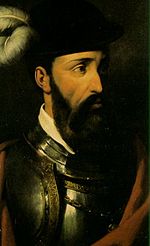
Pizzaro.
Read more ►

Monday, 21 January 2013

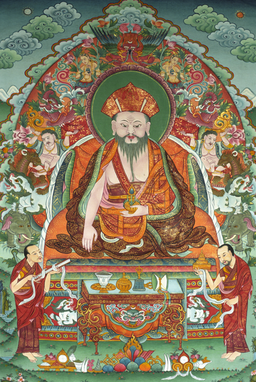
In 1616, Ngawang Namgyal, became shabdrung — At Whose Feet One Submits — the leader of Bhutan.

0 comments


"Considered the first great historical figure of Bhutan" today's "History of" country.
He promulgated a code of law and built a network of impregnable dzong, a system that helped bring local lords under centralized control and strengthened the country against Tibetan invasions....

Circa 1627, during the first war with Tibet, Portuguese Jesuits Estêvão Cacella and João Cabral were the first recorded Europeans to visit Bhutan on their way to Tibet. They met with Ngawang Namgyal, presented him with firearms, gunpowder and a telescope, and offered him their services in the war against Tibet, but the shabdrung declined the offer....
The legal code, called Tsa Yig, was based on "duties and virtues inherent in the Buddhist dharma" and "remained in force until the 1960s."
Read more ►

Sunday, 20 January 2013

"The Kingdom of Dahomey became a major power in the Atlantic slave trade..."

0 comments
"... with slaves supplied through raids of surrounding areas.  Oyo would sometimes put pressure on Dahomey to decrease their slave trade, largely to protect Oyo's own trade, which would slow the trade for a while before it increased again...."

The place that was the Kingdom of Dahomey is now called the Republic of Benin, and it is today's "History of" country. The French took over circa 1870, and the finally let go in 1960:
Between 1960 and 1972, a succession of military coups brought about many changes of government. The last of these brought to power Major Mathieu Kérékou as the head of a regime professing strict Marxist-Leninist principles. By 1975 the Republic of Dahomey changed its name to the People's Republic of Benin. The People's Revolutionary Party of Benin (PRPB) remained in complete power until the beginning of the 1990s. Kérékou, encouraged by France and other democratic powers, convened a national conference that introduced a new democratic constitution and held presidential and legislative elections....
Read more ►

Saturday, 19 January 2013

Maybe it was named after the buccaneer Peter Wallace.

0 comments
Belize — our "History of" country today. It's a legend, that the Spanish pronunciation of "Wallace" was Ballis and hence Belize. Belize. Do you know where it is? It's crammed in between Mexico and Guatamala.

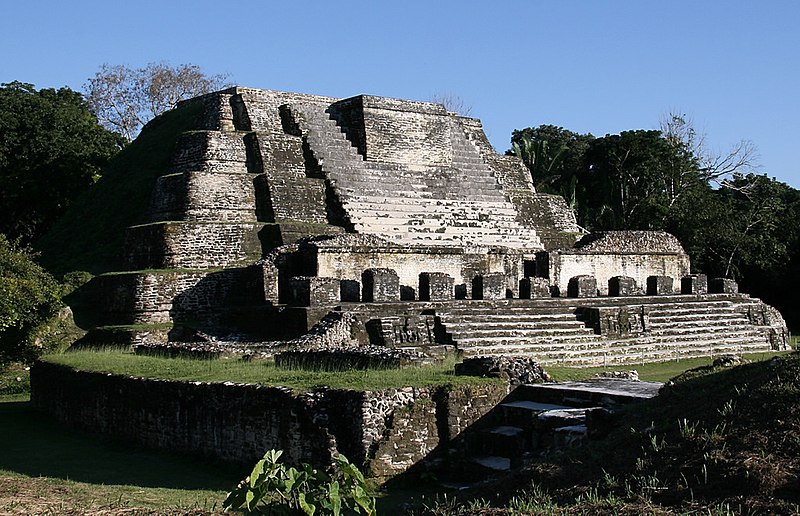
In places that today look like this...


... the Mayans flourished and then they were gone. We don't really know why. You can blame the Spanish. (Why not? They deserve it.) But Mayan civilization had collapsed by the time the Spanish got there. Then the English arrived, by shipwreck, in 1638. Squabbling between the Spanish and the English went on for a long time, and there was a lot of piracy and "indiscriminate logging."
Read more ►

Thursday, 17 January 2013

"Throughout their existence as a separate culture, Ruthenians formed in most cases rural population, with the power held by local szlachta and boyars..."

0 comments
"... often of Lithuanian, Polish or Russian descent. As in the rest of Central and Eastern Europe, the trade and commerce was mostly monopolized by Jews, who formed a significant part of the urban population."
Since the Union of Horodlo of 1413, local nobility was assimilated into the traditional clan system by means of the formal procedure of adoption by the szlacht... Initially mostly Ruthenian and Orthodox, with time most of them became polonized. This was especially true for major magnate families... whose personal fortunes and properties often surpassed those of the royal families and were huge enough to be called a state within a state. Many of them founded their own cities... with settlers from other parts of Europe. Indeed there were Scots, Germans and Dutch people inhabitating major towns of the area, as well as several Italian artists who had been "imported" to the lands of modern Belarus by the magnates.
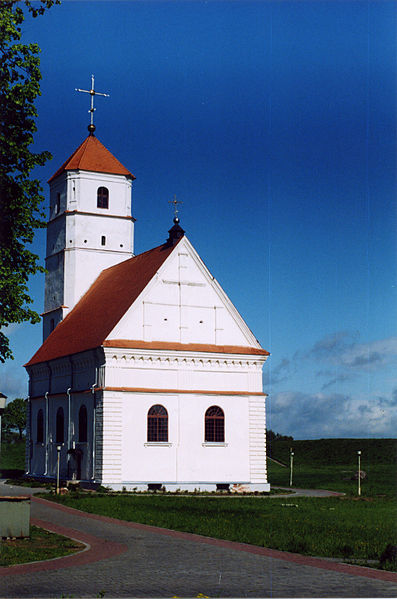
Have you thought about Belarus, today's "History of" country?

Read more ►

Wednesday, 16 January 2013

"By 1666 at least 12,000 white smallholders had been bought out, died," or left Barbados.

0 comments
"Many of the remaining whites were increasingly poor. By 1680 there were seventeen slaves for every indentured servant. By 1700, there were 15,000 free whites and 50,000 enslaved blacks."
... The British abolished the slave trade in 1807, but not the institution itself. In 1816, slaves rose up in the largest major slave rebellion in the island's history. Twenty thousand slaves from over seventy plantations rebelled. They drove whites off the plantations, but widespread killings did not take place. This was later termed "Bussa's Rebellion" after the slave ranger, Bussa, who with his assistants hated slavery, found the treatment of slaves on Barbados to be "intolerable," and believed the political climate in the UK made the time ripe to peacefully negotiate with planters for freedom... Bussa's Rebellion failed. One hundred and twenty slaves died in combat or were immediately executed; another 144 were brought to trial and executed; remaining rebels were shipped off the island...
Slavery was abolished in 1834 in Barbados, today's "History of" country.

ADDED: Here— at the U.K. National Archives website — is a school lesson on Bussa's rebellion, with nice scannings of original documents for students to read. And here's a drawing taken from the rebels that "appears to stress the rebels' loyalty to Britain and to the Crown while conveying their earnest desire for liberty."

God always saves endavour
Read more ►

Tuesday, 15 January 2013

"The Language Movement catalysed the assertion of Bengali national identity in Pakistan..."

0 comments
"... and became a forerunner to Bengali nationalist movements, including the 6-point movement and subsequently the Bangladesh Liberation War in 1971. In Bangladesh, 21 February is observed as Language Movement Day, a national holiday."

Bangladesh is today's "History of" country.

Here is the monument to the Language Movement martyrs:


What was so important about language?
When the state of Pakistan was formed in 1947, its two regions, East Pakistan (also called East Bengal) and West Pakistan, were split along cultural, geographical, and linguistic lines. In 1948, the Government of Pakistan ordained Urdu as the sole national language, sparking extensive protests among the Bengali-speaking majority of East Pakistan. 
Would East and West Pakistan be one country today if the government hadn't been so hardcore about Urdu?

Great differences began developing between the two wings of Pakistan. While the west had a minority share of Pakistan's total population, it had the largest share of revenue allocation, industrial development, agricultural reforms and civil development projects. Pakistan's military and civil services were dominated by the fair-skinned, Persian-cultured Punjabis and Afghans. Only one regiment in the Pakistani Army was Bengali. And many Bengali Pakistanis could not share the natural enthusiasm for the Kashmir issue, which they felt was leaving East Pakistan more vulnerable and threatened as a result.
Read more ►

Monday, 14 January 2013

"The Arab navigator, Ahmad Bin Majid, visited Bahrain in 1489..."

0 comments
"... and gave a contemporary account of the country that the first Portuguese would have seen:"
"In Awal (Bahrain) there are 360 villages and fresh water can be found in a number of places. A most wonderful al-Qasasir, where a man can dive into the salt sea with a skin and can fill it with fresh water while he is submerged in the salt water. Around Bahrain are pearl fisheries and a number of islands all of which have pearl fisheries and connected with this trade are 1,000 ships."
Today's "History of" country is Bahrain. 
Read more ►

Sunday, 13 January 2013

The America Christopher Columbus discovered on October 12, 1492 was an island in what is today the Bahamas.

0 comments
The Commonwealth of the Bahamas is today's "History of" country. It was an island that was inhabited by the Lucayans, who called it Guanahani. The Lucayans had canoed over to the Bahama islands between 500 and 800 A.D.
The Bahamas held little of interest to the Spanish other than as a source of slave labor. Nearly the entire population of Lucayans (almost 40,000 people total) were deported over the next 30 years. When the Spanish decided to evacuate the remaining Lucayans to Hispaniola in 1520, they could find only eleven in all of the Bahamas. The islands remained abandoned and depopulated for 130 years afterwards....
English settlers began arriving in 1648. The first, who called themselves Eleutherians, were farmers who didn't do too well. The New Providence settlement, begun in 1666 "made their living from the sea, salvaging (mainly Spanish) wrecks, making salt, and taking fish, turtles, conchs and ambergris."

Conflicts with the Spanish ensued over this salvaging of Spanish wrecks, and in 1685, the Spanish burned down New Providence and Eleuthera and these places were "largely abandoned." Five years later, the place was full of English privateers, who — after England made peace with France — became pirates. Then — if I'm reading this right — the pirates got back to being privateers or back again to being pirates depending on whether there was there was a war going on.

If you want to investigate the privateer/pirate distinction, you can look here.

Nowadays, the Bahamas seems like a nice place to go for vacation, and it looks like the tourists like the pirate-related attractions, like the Pirates of Nassau Museum, which invites you to "plunder" its gift shop.
Read more ►

Saturday, 12 January 2013

"The cave of Azykh in the territory of the Fizuli district in the Republic of Azerbaijan..."

0 comments
"...is considered to be the site of one of the most ancient proto-human habitations in Eurasia."


"The influence of ancient peoples and civilizations including the Sumerians and Elamites came to a crossroads in the territory of Azerbaijan.... In the 8th century BCE, the semi-nomadic Cimmerians and Scythians settled in the territory.... The Assyrians also had a civilization that flourished to the west of Lake Urmia in the centuries prior to creation of Media and Albania."

Today's "History of" country is Azerbaijan. 
Read more ►

Friday, 11 January 2013

"The ordinary people were not happy. They loathed the Emperor's interference in every detail of their daily lives."

0 comments
"Why should they be forbidden to bake ginger-bread just because Joseph thought it bad for the stomach? Why the Imperial edict demanding the breast-feeding of infants? Why the banning of corsets? From these and a thousand other petty regulations, enforced by a secret police, it looked to the Austrians as though Joseph were trying to reform their characters as well as their institutions. Only a few weeks before Joseph's death, the director of the Imperial Police reported to him: 'All classes, and even those who have the greatest respect for the sovereign, are discontented and indignant.'"

From the History of Austria. Joseph II, who ruled from 1780 to 1790.


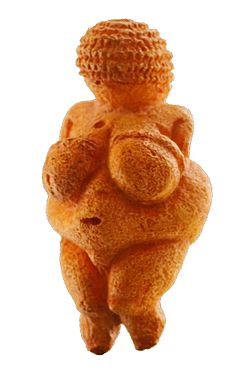
Austria is our "History of" country today, as we proceed through the 206 countries of the world using the Wikipedia summaries. So much has happened in Austria over the ages. The "History of" project cannot begin to summarize the summary. I merely offer up a snippet, one thing that struck me as something that might have particular resonance. But it is only one of many things. For example, from 25,000 BC:

Read more ►

Thursday, 10 January 2013

Wednesday, 9 January 2013

The oldest leather shoe and skirt were found...

0 comments
... in Armenia. Today's "History of" country.

"After the fall of Urartu around 585 BC, the Satrapy of Armenia was ruled by the Armenian Orontid Dynasty, which governed the state in 585 – 190 BC."

"In 301, Armenia became the first nation to adopt Christianity as a state religion."

"In 645, the Muslim Arab armies of the Caliphate had attacked and conquered the country. Armenia, which once had its own rulers and was at other times under Persian and Byzantine control, passed largely into the power of the Caliphs."

"Due to its strategic significance, Armenia was constantly fought over and passed back and forth between the dominion of Persia and the Ottomans. At the height of the Ottoman-Persian wars, Yerevan changed hands fourteen times between 1513 and 1737."

"In 1915, the Ottoman Empire systematically carried out the Armenian Genocide. This was preceded by a wave of massacres in the years 1894 to 1896, and another one in 1909 in Adana. In 1915, with World War I in progress, the Ottoman Turks accused the (Christian) Armenians as liable to ally with Russia, and treated the entire Armenian population as an enemy within their empire."

"In 1922, the newly-proclaimed Armenian Soviet Socialist Republic, under the leadership of Alexander Miasnikyan, became part of the Soviet Union as one of three republics comprising the Transcaucasian SFSR.... The Transcaucasian SFSR was dissolved in 1936 and as a result Armenia became a constituent republic of the Soviet Union as the Armenian Soviet Socialist Republic. The transition to communism was difficult for Armenia...."

"Soviet Armenia participated in World War II by sending hundreds of thousands of soldiers to the frontline in order to defend the 'Soviet motherland.'"

"Armenia declared its sovereignty from the Soviet Union on August 23, 1990....  Following an overwhelming vote in favor, full independence was declared on September 21, 1991."
Read more ►
 

Copyright © Diet Althouse Design by O Pregador | Blogger Theme by Blogger Template de luxo | Powered by Blogger