"... and twinkle against the windows, and the dim lights of small Wisconsin stations moved by, a sharp wild brace came suddenly into the air."
To diagram that sentence — today's sentence from "The Great Gatsby" — begin with: brace | came. The subject of the sentence is brace, and the predicate is came. You've got a long clause beginning the sentence which has 3 parts to it — one with a we | pulled subject and verb, one with snow as a subject and the verb began tied to stretch and twinkle, and one with lights and moved. There is also a pair of "into" phrases — "into the winter night" and "into the air" — near the beginning and at the very end of the sentence.
You could easily get on the wrong track reading this sentence and think the real snow is part of what we pulled out into, especially with no comma after night, but the real snow, our snow is the subject of the next phrase. We don't pull out into the snow, only into the night. The snow then takes over the action, stretching out beside us. That's a little sexy, like the snow is in bed with us. But then we see that we must be on a train and the snow is out there in the night, on the other side of the windows. The snow twinkles against the window. It's a kind of light, twinkling. It's tiny lights that mingle with dim lights, the tiny lights of small Wisconsin stations. The stations move by — that's the illusion as we move forward on this train into Wisconsin, into the real snow, our snow, the snow that's like a lover in bed with us, with tiny twinkly lights all around.
Did you get that thrill? It was a sharp wild brace that came suddenly into the air. Orgasmic!
ADDED: Speaking of thrills, here's Chip Ahoy's animation of the "Gatsby" sentence I revealed to be my favorite, 3 days ago:

"A tray of cocktails floated at us through the twilight, and we sat down at a table with the two girls in yellow and three men, each one introduced to us as Mr. Mumble."
Read more ►
To diagram that sentence — today's sentence from "The Great Gatsby" — begin with: brace | came. The subject of the sentence is brace, and the predicate is came. You've got a long clause beginning the sentence which has 3 parts to it — one with a we | pulled subject and verb, one with snow as a subject and the verb began tied to stretch and twinkle, and one with lights and moved. There is also a pair of "into" phrases — "into the winter night" and "into the air" — near the beginning and at the very end of the sentence.
You could easily get on the wrong track reading this sentence and think the real snow is part of what we pulled out into, especially with no comma after night, but the real snow, our snow is the subject of the next phrase. We don't pull out into the snow, only into the night. The snow then takes over the action, stretching out beside us. That's a little sexy, like the snow is in bed with us. But then we see that we must be on a train and the snow is out there in the night, on the other side of the windows. The snow twinkles against the window. It's a kind of light, twinkling. It's tiny lights that mingle with dim lights, the tiny lights of small Wisconsin stations. The stations move by — that's the illusion as we move forward on this train into Wisconsin, into the real snow, our snow, the snow that's like a lover in bed with us, with tiny twinkly lights all around.
Did you get that thrill? It was a sharp wild brace that came suddenly into the air. Orgasmic!
ADDED: Speaking of thrills, here's Chip Ahoy's animation of the "Gatsby" sentence I revealed to be my favorite, 3 days ago:
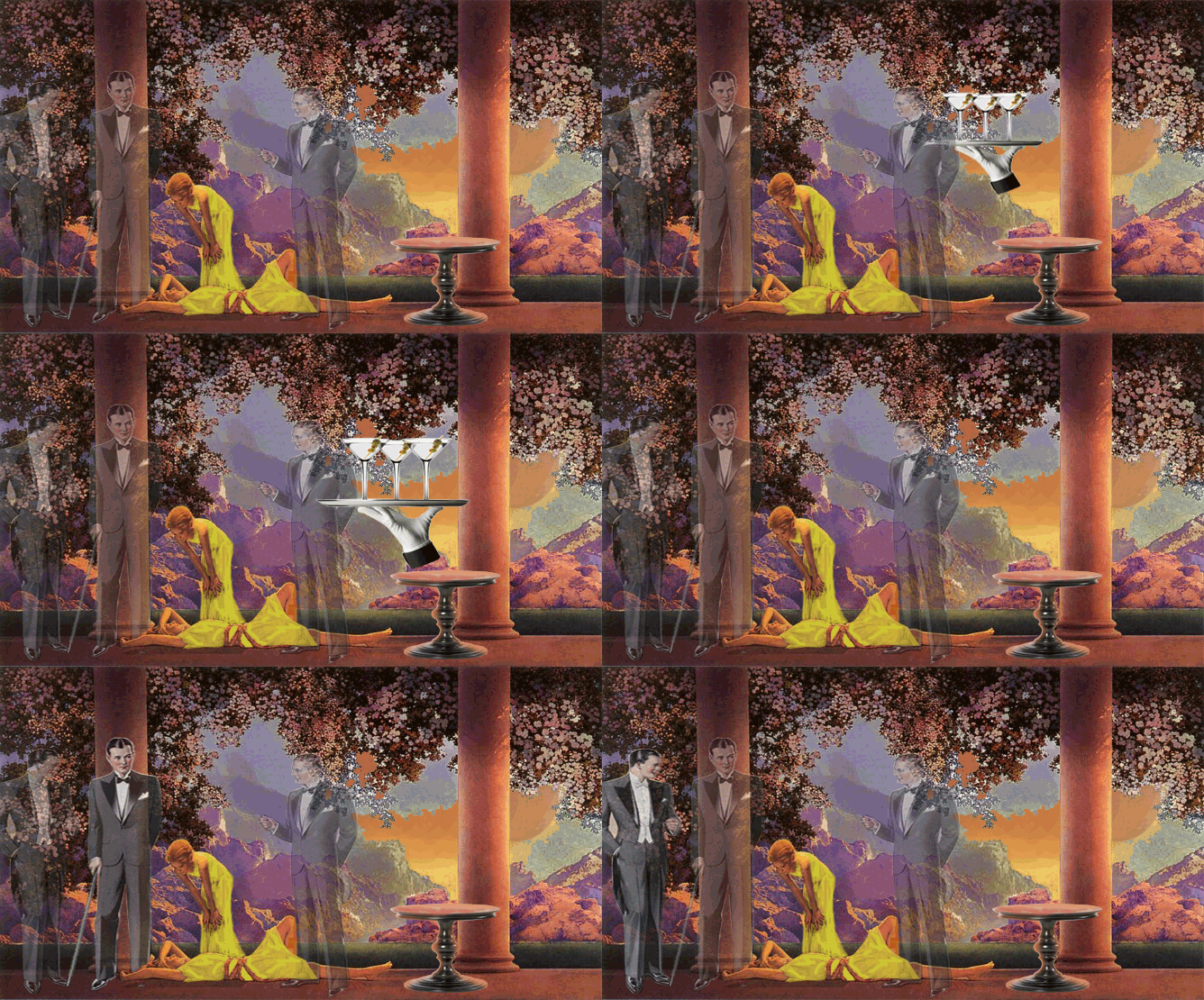
"A tray of cocktails floated at us through the twilight, and we sat down at a table with the two girls in yellow and three men, each one introduced to us as Mr. Mumble."


