Thursday, 24 January 2013
Saturday, 19 January 2013
"I don’t think we should talk about Lincoln’s underwear..."
"It’s not appropriate for someone so iconic. Even in the bedroom, Lincoln is never shown in his pajamas. He’s in his shirt and pants."
Joanna Johnston, movie costume designer.
"But even the President of the United States/Sometimes must have to stand naked."
Bob Dylan.
"How many Bob Dylan songs have the word 'naked' and how many of them can you name?" I challenge Meade with a Bob Dylan test, as I tend to do when I've done a search at bobdylan.com (as I did for the "It's Alright Ma" quote, above).
Meade immediately says "even the President of the United States sometimes must have to stand naked," then none of the others — not even "You see somebody naked and you say who is that man?" — and makes 2 wrong guesses:

Beards. Fidel Castro made a beard as off limits to an American president — in spite of Lincoln — as Hitler made the mustache. And here I want to go back to that "Becoming Adolf" article by Rich Cohen that were were talking about a couple days ago:
Pick one:


Read more ►
Joanna Johnston, movie costume designer.
***
"But even the President of the United States/Sometimes must have to stand naked."
Bob Dylan.
***
"How many Bob Dylan songs have the word 'naked' and how many of them can you name?" I challenge Meade with a Bob Dylan test, as I tend to do when I've done a search at bobdylan.com (as I did for the "It's Alright Ma" quote, above).
Meade immediately says "even the President of the United States sometimes must have to stand naked," then none of the others — not even "You see somebody naked and you say who is that man?" — and makes 2 wrong guesses:
MEADE: "'Mr. Tambourine Man'... just to dance beneath the naked sky..."In "Motorpsycho Nightmare," Bob Dylan is just trying to get some sleep — no sign that he's sleeping naked — when Rita — "Lookin’ just like Tony Perkins" (i.e., the murderer in "Psycho") importunes him to take a shower. He's freaked out: "Oh, no! no! I’ve been through this [movie] before." Afraid of getting knifed to death, but unwilling to run off unless her father (the farmer) throws him out (because he promised the farmer he'd milk the cows in the morning), his sees his only option as saying "something to strike him very weird." What he says is: "I like Fidel Castro and his beard."
ME: "That's 'diamond sky.'"
MEADE: "The one where the farmer is chasing him out of his house."
ME: "'Motorpsycho Nightmare?' No."
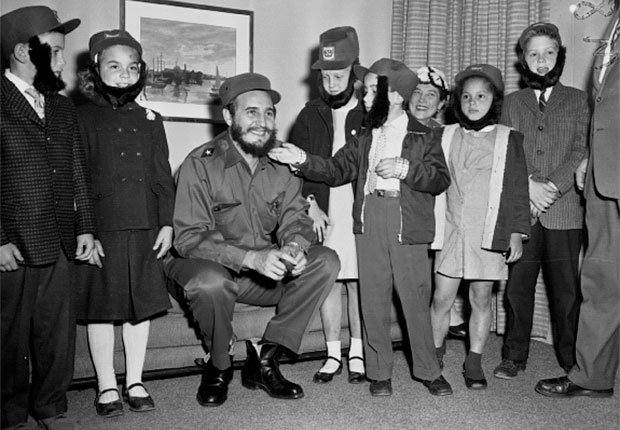
Beards. Fidel Castro made a beard as off limits to an American president — in spite of Lincoln — as Hitler made the mustache. And here I want to go back to that "Becoming Adolf" article by Rich Cohen that were were talking about a couple days ago:
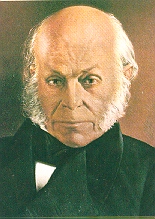
[Y]ou could not wear any kind of mustache after [WWII], because, running from Hitler, you might run into Stalin. Hitler plus Stalin ended the career of the mustache in Western political life. Before the war, all kinds of American presidents wore a mustache and/or beard. You had John Quincy Adams, with his muttonchops...Are we going to decide who deserves out trust based on they look? Come on, Abe. Lose the beard. Okay.
You had Abe Lincoln, whose facial hair...
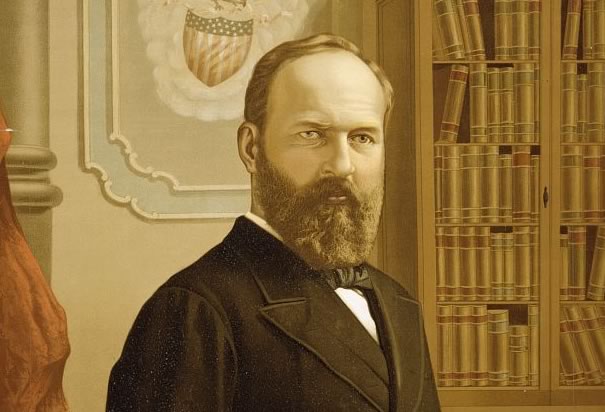
... like his politics, was the opposite of Hitler's: beard full, lip bare. You had James Garfield, who had the sort of vast rabbinical beard into which whole pages of legislation could vanish.
You had Rutherford B. Hayes...
Grover Cleveland...
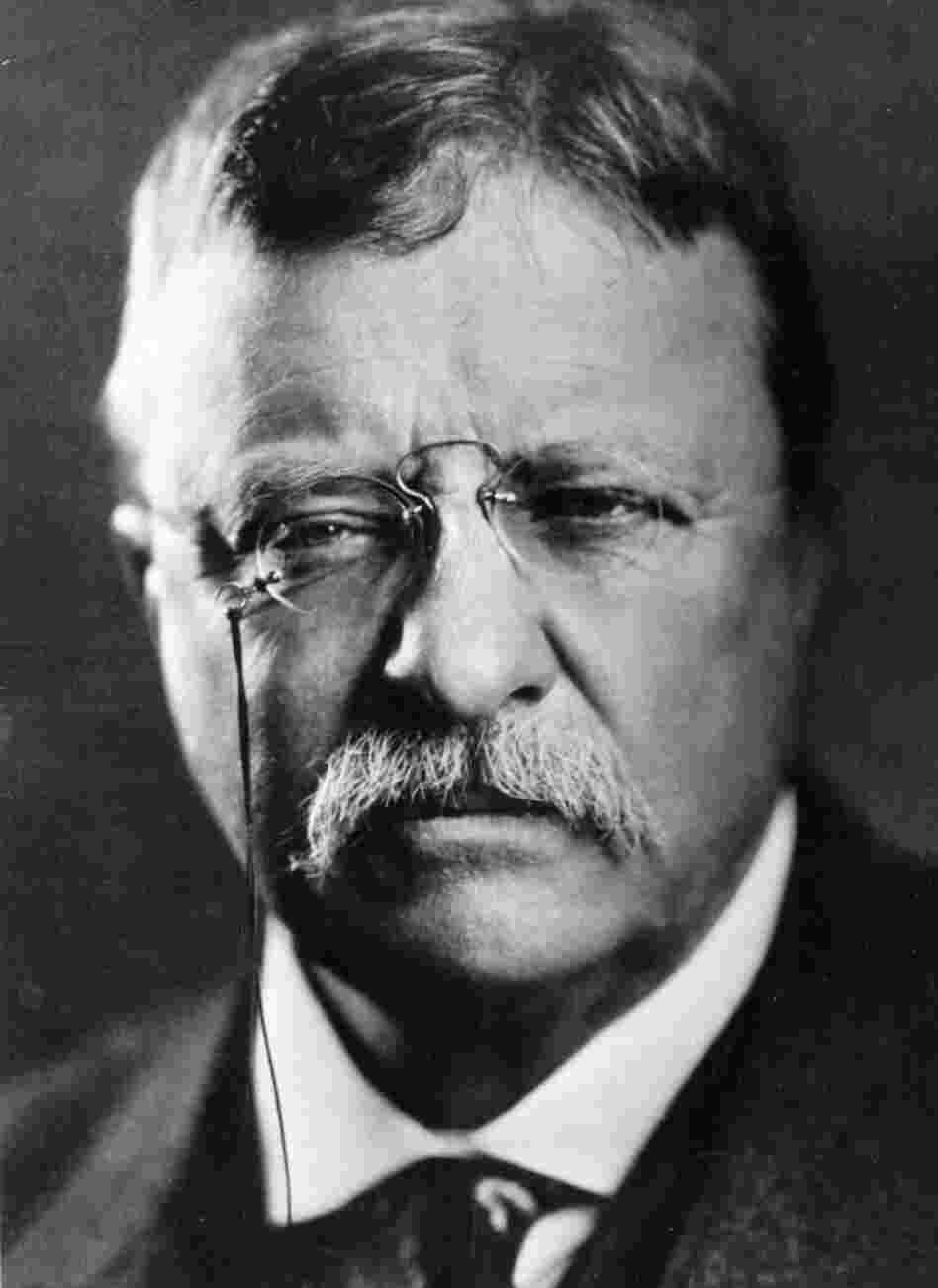
... and Teddy Roosevelt, whose asthma and elephant gun were just a frame for his mustache.
You had William Howard Taft — the man wore a Walrus!
After the war, the few American politicians who still wore a mustache were those who had made their name before Hitler and so had been grandfathered in. Like Thomas Dewey.
Dewey was Eliot Spitzer. He was a prosecutor in New York in the 1930s (and later governor), the only guy with the guts to take on the Mob. For Dewey, the rise of Hitler was a fashion disaster. Because Dewey wore a neat little mustache. Dewey ran for president twice — losing to F.D.R., losing to Truman. In my opinion, without the mustache, the headline in the Chicago Daily Tribune (Dewey Defeats Truman) turns true. One of the few prominent American politicians to wear facial hair in recent memory is Al Gore, who grew a Grizzly Adams beard after he lost to George Bush, in 2000. The appearance of this beard was taken to mean either (1) Gore would never again run for office, or (2) Gore had gone completely mental.
The decision to grow a mustache or a beard is all by itself reason to keep a man away from the nuclear trigger.



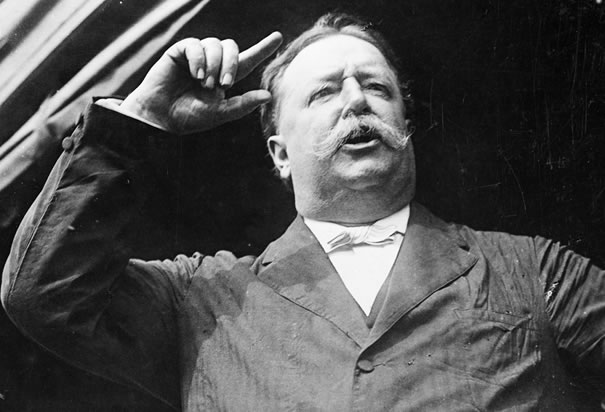


Pick one:


Thursday, 17 January 2013
The use of children in politics — if you find it persuasive, you'd better sharpen up.
Drudge is doing propaganda here:

But it's very heavy-handed propaganda deployed to critique propaganda. You won't slip into falling for Drudge's propaganda, because it's so obvious. It's ridiculous to equate Obama to Hitler and Stalin, but Obama is using a form of propaganda that should be considered not merely ridiculous but repulsive. For us today to see Hitler and Stalin using children is to easily perceive the absurdity of promoting a political agenda juxtaposing it to a lovely, innocent child.
Who falls for that? No one should! The implicit argument the political leader makes, in all 3 of these pictures, is: I'm making the country good for the sake of the children. The child can't vouch for the policies. The child hasn't competently requested anything. The child is merely a prop representing goodness, innocence, and the future.
I've had a "using children in politics" tag for a while. I've made it part of my work here on the blog to notice this phenomenon, to help you see it, and to build widespread resistance to it. Remember the "children of the future" blaming us? The children taught to chant "Hey hey, ho ho, Scott Walker has got to go"? The children delighted by the "Voter Report Card"?
Drudge links to a collection of "Tyrants Who Have Used Children as Props." It's not hard to dig up these things. All politicians pose with children.

Baby-kissing is a campaign cliché.

It's a way of saying: I'm a real person. I'm normal and empathetic.
No reason to condemn that. It's too late to reject the kind of old-fashioned political kitsch that goes in the same category as eating regional food. You know, what Bob Dylan was singing about in "I Shall Be Free":
Read more ►

But it's very heavy-handed propaganda deployed to critique propaganda. You won't slip into falling for Drudge's propaganda, because it's so obvious. It's ridiculous to equate Obama to Hitler and Stalin, but Obama is using a form of propaganda that should be considered not merely ridiculous but repulsive. For us today to see Hitler and Stalin using children is to easily perceive the absurdity of promoting a political agenda juxtaposing it to a lovely, innocent child.
Who falls for that? No one should! The implicit argument the political leader makes, in all 3 of these pictures, is: I'm making the country good for the sake of the children. The child can't vouch for the policies. The child hasn't competently requested anything. The child is merely a prop representing goodness, innocence, and the future.
I've had a "using children in politics" tag for a while. I've made it part of my work here on the blog to notice this phenomenon, to help you see it, and to build widespread resistance to it. Remember the "children of the future" blaming us? The children taught to chant "Hey hey, ho ho, Scott Walker has got to go"? The children delighted by the "Voter Report Card"?
Drudge links to a collection of "Tyrants Who Have Used Children as Props." It's not hard to dig up these things. All politicians pose with children.

Baby-kissing is a campaign cliché.

It's a way of saying: I'm a real person. I'm normal and empathetic.
No reason to condemn that. It's too late to reject the kind of old-fashioned political kitsch that goes in the same category as eating regional food. You know, what Bob Dylan was singing about in "I Shall Be Free":
Now, the man on the stand he wants my voteDon't you eat the bullshit!
He’s a-runnin’ for office on the ballot note
He’s out there preachin’ in front of the steeple
Tellin’ me he loves all kinds-a people
(He’s eatin’ bagels
He’s eatin’ pizza
He’s eatin’ chitlins
He’s eatin’ bullshit!)
Sunday, 13 January 2013
"I was reckless writing about recklessness."
I say, noting that I got quoted over at Instapundit with a missing "it's" apostrophe: "he’s entirely reckless about what these laws would really mean to ordinary people, and its a recklessness that thrives in the mind of someone who...."
"Oh! It's blogging," says Meade. "It's the internet. Think how many times you've gotten it right."
"And it's more embarrassing to get the apostrophe wrong the other way," I soothe myself, referring to putting the apostrophe in "its" when it's supposed to be out.
"It's embarrassing to be embarrassed," Meade asserts aphoristically.
"But I was criticizing recklessness at the very point when I was reckless," I brood nonetheless. "It's like the way whenever you mock a misspelling, you end up misspelling something."
I decide to write this post, which — speaking of blogging — is the antidote to embarrassment.
Read more ►
"Oh! It's blogging," says Meade. "It's the internet. Think how many times you've gotten it right."
"And it's more embarrassing to get the apostrophe wrong the other way," I soothe myself, referring to putting the apostrophe in "its" when it's supposed to be out.
"It's embarrassing to be embarrassed," Meade asserts aphoristically.
"But I was criticizing recklessness at the very point when I was reckless," I brood nonetheless. "It's like the way whenever you mock a misspelling, you end up misspelling something."
I decide to write this post, which — speaking of blogging — is the antidote to embarrassment.
***
On the rooftops they dance
Valentino-type tangos
While the makeup man’s hands
Shut the eyes of the dead
Not to embarrass anyone
The sky is embarrassed
And I must be gone
Saturday, 12 January 2013
"If there were equal justice under the law, what would be the point of being a Very Important Person?"
Asks Glenn Reynolds after quoting me on David Gregory and equal justice under the law.
I'm working on my song parody:
This isn't parody — this is straight from the original "Lonesome Death of Hattie Carroll":
Here, the "noble" David Gregory got special handling, the strings in the books were pulled and persuaded, and the ladder of law obviously has a top.
I'm not saying I want Gregory prosecuted. I only want people to see how unfair it is to have a law that seems ridiculous to enforce against him, when that law is used against others. And Gregory richly deserves to be slapped around on the blogs, because he's making the argument — that's why he was waving that thing around — that there ought to be more invasive gun laws. He wants the government to reach more deeply into the ordinary lives of private citizens, and he's entirely reckless about what these laws would really mean to ordinary people, and it's a recklessness that thrives in the mind of someone who easily and instinctively believed — correctly! — that the law did not apply to him.
And even the nobles get properly handled....
Read more ►
I'm working on my song parody:
David Gregory had a high-capacity ammunition magazineI've parodied that song before (back when William Zantzinger died).
He held it and twirled it 'round his diamond ring finger
At a "Meet the Press" studio society gath’rin’
And the cops weren't called in but the bloggers demanded
That David Gregory should be booked for possession
Take the rag away from your face
Now ain’t the time for your tears....
This isn't parody — this is straight from the original "Lonesome Death of Hattie Carroll":
In the courtroom of honor, the judge pounded his gavelIn David Gregory's case, the cops never even considered chasing him. There will be no judge pounding the gavel, because there will be no prosecution. Bob Dylan was outraged that Zantzinger — Zanzinger, to spell it the Dylan way — got a light sentence. At least he went to trial. And he was convicted.
To show that all’s equal and that the courts are on the level
And that the strings in the books ain’t pulled and persuaded
And that even the nobles get properly handled
Once that the cops have chased after and caught ’em
And that the ladder of law has no top and no bottom
Here, the "noble" David Gregory got special handling, the strings in the books were pulled and persuaded, and the ladder of law obviously has a top.
I'm not saying I want Gregory prosecuted. I only want people to see how unfair it is to have a law that seems ridiculous to enforce against him, when that law is used against others. And Gregory richly deserves to be slapped around on the blogs, because he's making the argument — that's why he was waving that thing around — that there ought to be more invasive gun laws. He wants the government to reach more deeply into the ordinary lives of private citizens, and he's entirely reckless about what these laws would really mean to ordinary people, and it's a recklessness that thrives in the mind of someone who easily and instinctively believed — correctly! — that the law did not apply to him.
And even the nobles get properly handled....
Tuesday, 8 January 2013
"Your average Dylan fan could be excused for not knowing about a new European compilation called The Copyright Extension Collection Vol. 1."
"Only 100 of these four-CD sets even exist, and they've been shipped to a tiny number of stores located in Germany, France, Sweden, and Britain."
Obviously, ultimately, this is a product that will be mass produced. But it's not what Dylan wants to put out now, and it doesn't hurt business, in the long run, to have this enticing rarity out there getting people advance-excited over what is only 86 outtakes from the Times-They-Are-A-Changin' days.
Read more ►
Though it collects Dylan's highly precious unreleased studio outtakes and live recordings from 1962 and 1963, Sony is putting almost no promotion behind the collection....Although this no-promotion thing works as a kind of promotion, viral promotion. But apparently, this release isn't about selling product at all. It's about preserving copyright. After 50 years, if nothing is done with a recording, the European copyright would expire. By doing something — next to nothing — the copyright can be extended for another 20 years. So they put out a 4-CD set — only 100 of them.
Obviously, ultimately, this is a product that will be mass produced. But it's not what Dylan wants to put out now, and it doesn't hurt business, in the long run, to have this enticing rarity out there getting people advance-excited over what is only 86 outtakes from the Times-They-Are-A-Changin' days.
Saturday, 5 January 2013
"The only building in sight was a small block of yellow brick sitting on the edge of the waste land, a sort of compact Main Street ministering to it, and contiguous to absolutely nothing."
The Waste Land... I think of T.S. Eliot's poem, which was published in 1922. Coincidentally, "The Great Gatsby" — the source of the sentence quoted above — is a story that takes place in 1922. F. Scott Fitzgerald began planning "The Great Gatsby" in 1922, and the book was published in 1925. I'm forced to think this sentence is a shout-out to Eliot.
The waste land sits in the middle of a sentence about a building sitting on the edge of that waste land. It's an expansive vista, with one lone building. The building is called a "block," as if it's a child's toy, and it's all alone, because it's the only building in sight. We, the readers, are placed at a vantage point from which we can see this cityscape as a desolate plain, upon which there's that one block. But it's yellow. That's jazzy and hopeful.
What's going on with that building? We're not going to find out in this sentence, and whatever's around it is like a waste land, because we don't talk about the context in this Gatsby project, which is all about taking one sentence out of context, but of course we know there's a great book all around it, and that sentence is not sitting like a yellow block on the edge of a waste land.
I've been ignoring the second half of the sentence for too long. Let's examine the post-waste land segment. Our yellow block is on the edge of a waste land. If it's an edge, could there not be interesting things somewhere else? No. We're told that it's contiguous to absolutely nothing. I'm having a bit of a hard time understanding how the building can be on an edge when everything around it is nothing — absolutely nothing — especially since there's Main Street in the picture too. A sort of compact Main Street ministering to it.
That's a mystery, so I take it we need to get the message: There is a mystery here. Why does a lone yellow-brick building exist in a void and yet receive ministering?
The words building, block, yellow, brick, sitting, edge, waste, sort, compact, main, minister, contiguous, and absolute do not appear in the poem "The Waste Land." Sight and small appear, but not importantly. Land, street, and nothing are all significant:
As Bob Dylan says: "You’ve been through all of F. Scott Fitzgerald’s books/You’re very well read/It’s well known" and "And Ezra Pound and T. S. Eliot/Fighting in the captain’s tower/While calypso singers laugh at them/And fishermen hold flowers."
But you're probably wondering by now, what about that yellow brick? Maybe Fitzgerald was thinking about the yellow brick road in the "The Wizard of Oz" or that Elton John song.
Read more ►
The waste land sits in the middle of a sentence about a building sitting on the edge of that waste land. It's an expansive vista, with one lone building. The building is called a "block," as if it's a child's toy, and it's all alone, because it's the only building in sight. We, the readers, are placed at a vantage point from which we can see this cityscape as a desolate plain, upon which there's that one block. But it's yellow. That's jazzy and hopeful.
What's going on with that building? We're not going to find out in this sentence, and whatever's around it is like a waste land, because we don't talk about the context in this Gatsby project, which is all about taking one sentence out of context, but of course we know there's a great book all around it, and that sentence is not sitting like a yellow block on the edge of a waste land.
I've been ignoring the second half of the sentence for too long. Let's examine the post-waste land segment. Our yellow block is on the edge of a waste land. If it's an edge, could there not be interesting things somewhere else? No. We're told that it's contiguous to absolutely nothing. I'm having a bit of a hard time understanding how the building can be on an edge when everything around it is nothing — absolutely nothing — especially since there's Main Street in the picture too. A sort of compact Main Street ministering to it.
That's a mystery, so I take it we need to get the message: There is a mystery here. Why does a lone yellow-brick building exist in a void and yet receive ministering?
The words building, block, yellow, brick, sitting, edge, waste, sort, compact, main, minister, contiguous, and absolute do not appear in the poem "The Waste Land." Sight and small appear, but not importantly. Land, street, and nothing are all significant:
April is the cruellest month, breeding/Lilacs out of the dead land...So the poem begins. And very near the end:
I sat upon the shoreStreet:
Fishing, with the arid plain behind me
Shall I at least set my lands in order?
"What shall I do now? What shall I do?Nothing:
I shall rush out as I am, and walk the street
With my hair down, so. What shall we do to-morrow?
What shall we ever do?"
“What is that noise?”I really have no idea if F. Scott Fitzgerald was thinking about T.S. Eliot.
The wind under the door.
“What is that noise now? What is the wind doing?”
Nothing again nothing.
“Do
You know nothing? Do you see nothing? Do you remember
Nothing?”
I remember
Those are pearls that were his eyes.
“Are you alive, or not? Is there nothing in your head?”
As Bob Dylan says: "You’ve been through all of F. Scott Fitzgerald’s books/You’re very well read/It’s well known" and "And Ezra Pound and T. S. Eliot/Fighting in the captain’s tower/While calypso singers laugh at them/And fishermen hold flowers."
But you're probably wondering by now, what about that yellow brick? Maybe Fitzgerald was thinking about the yellow brick road in the "The Wizard of Oz" or that Elton John song.
Tuesday, 1 January 2013
At the New Morning Café...

... so happy just to see you smile/underneath the sky of blue...
Subscribe to:
Comments (Atom)

