Thursday, 24 January 2013
Sunday, 20 January 2013
"Thriller, Beat it, and Bad all in one video!"
"When ever I get angry, this is what I feel like doing."
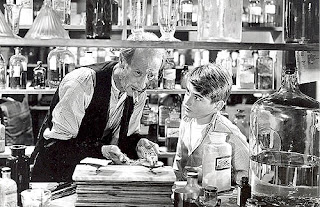
Apt comments at a YouTube video I turned up in the process of trying to write a bit more to this post that ends with "kinda like Mr. Gower, the drugstore man, in 'It's a Wonderful Life.'" I wanted to add: or Doc at the candy store in "West Side Story."
Read more ►
Apt comments at a YouTube video I turned up in the process of trying to write a bit more to this post that ends with "kinda like Mr. Gower, the drugstore man, in 'It's a Wonderful Life.'" I wanted to add: or Doc at the candy store in "West Side Story."

The Sandy Hook massacre should "force us to confront yet again the ways in which ever more of our lives are lived on a screen, in the cloud, via our computers and phones and tablets...."
Says Michael S. Rosenwald, noting that:
Read more ►
Except for using the bathroom and eating his meals, getting a haircut was just about the only thing Lanza couldn’t do online.Adam Lanza got haircuts, went to the bathroom, and ate food. Are we not forced to confront yet again our eating of food, getting of haircuts, and going to the bathroom?
[Lanza] seems to have found “an illusion of companionship without the demands of friendship”.... Lanza didn’t need to trek out into his town....Now, it's a problem that we don't spend enough time schlepping around at the mall? The cashiers at The Gap and Banana Republic were supposedly keeping us minimally socialized? Or is it that "tightknit Newtown" had shop owners who reinforced the social structure of the picture-book town — kinda like Mr. Gower, the drugstore man, in "It's a Wonderful Life"...
Shop owners in tightknit Newtown didn’t know him, I think, because he had no reason to know them. Amazon could deliver anything he wanted to his door by the next day.
The time we spend shopping is in decline.... The local stores we once loved visiting have been replaced by UPS drivers we rarely see....

Saturday, 19 January 2013
"I don’t think we should talk about Lincoln’s underwear..."
"It’s not appropriate for someone so iconic. Even in the bedroom, Lincoln is never shown in his pajamas. He’s in his shirt and pants."
Joanna Johnston, movie costume designer.
"But even the President of the United States/Sometimes must have to stand naked."
Bob Dylan.
"How many Bob Dylan songs have the word 'naked' and how many of them can you name?" I challenge Meade with a Bob Dylan test, as I tend to do when I've done a search at bobdylan.com (as I did for the "It's Alright Ma" quote, above).
Meade immediately says "even the President of the United States sometimes must have to stand naked," then none of the others — not even "You see somebody naked and you say who is that man?" — and makes 2 wrong guesses:

Beards. Fidel Castro made a beard as off limits to an American president — in spite of Lincoln — as Hitler made the mustache. And here I want to go back to that "Becoming Adolf" article by Rich Cohen that were were talking about a couple days ago:
Pick one:


Read more ►
Joanna Johnston, movie costume designer.
***
"But even the President of the United States/Sometimes must have to stand naked."
Bob Dylan.
***
"How many Bob Dylan songs have the word 'naked' and how many of them can you name?" I challenge Meade with a Bob Dylan test, as I tend to do when I've done a search at bobdylan.com (as I did for the "It's Alright Ma" quote, above).
Meade immediately says "even the President of the United States sometimes must have to stand naked," then none of the others — not even "You see somebody naked and you say who is that man?" — and makes 2 wrong guesses:
MEADE: "'Mr. Tambourine Man'... just to dance beneath the naked sky..."In "Motorpsycho Nightmare," Bob Dylan is just trying to get some sleep — no sign that he's sleeping naked — when Rita — "Lookin’ just like Tony Perkins" (i.e., the murderer in "Psycho") importunes him to take a shower. He's freaked out: "Oh, no! no! I’ve been through this [movie] before." Afraid of getting knifed to death, but unwilling to run off unless her father (the farmer) throws him out (because he promised the farmer he'd milk the cows in the morning), his sees his only option as saying "something to strike him very weird." What he says is: "I like Fidel Castro and his beard."
ME: "That's 'diamond sky.'"
MEADE: "The one where the farmer is chasing him out of his house."
ME: "'Motorpsycho Nightmare?' No."
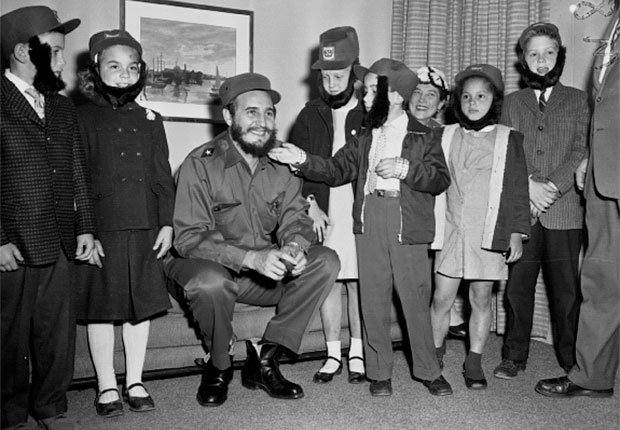
Beards. Fidel Castro made a beard as off limits to an American president — in spite of Lincoln — as Hitler made the mustache. And here I want to go back to that "Becoming Adolf" article by Rich Cohen that were were talking about a couple days ago:
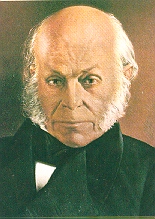
[Y]ou could not wear any kind of mustache after [WWII], because, running from Hitler, you might run into Stalin. Hitler plus Stalin ended the career of the mustache in Western political life. Before the war, all kinds of American presidents wore a mustache and/or beard. You had John Quincy Adams, with his muttonchops...Are we going to decide who deserves out trust based on they look? Come on, Abe. Lose the beard. Okay.
You had Abe Lincoln, whose facial hair...
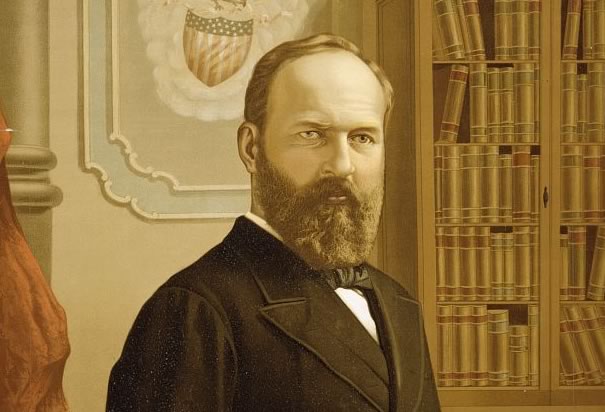
... like his politics, was the opposite of Hitler's: beard full, lip bare. You had James Garfield, who had the sort of vast rabbinical beard into which whole pages of legislation could vanish.
You had Rutherford B. Hayes...
Grover Cleveland...
... and Teddy Roosevelt, whose asthma and elephant gun were just a frame for his mustache.
You had William Howard Taft — the man wore a Walrus!
After the war, the few American politicians who still wore a mustache were those who had made their name before Hitler and so had been grandfathered in. Like Thomas Dewey.
Dewey was Eliot Spitzer. He was a prosecutor in New York in the 1930s (and later governor), the only guy with the guts to take on the Mob. For Dewey, the rise of Hitler was a fashion disaster. Because Dewey wore a neat little mustache. Dewey ran for president twice — losing to F.D.R., losing to Truman. In my opinion, without the mustache, the headline in the Chicago Daily Tribune (Dewey Defeats Truman) turns true. One of the few prominent American politicians to wear facial hair in recent memory is Al Gore, who grew a Grizzly Adams beard after he lost to George Bush, in 2000. The appearance of this beard was taken to mean either (1) Gore would never again run for office, or (2) Gore had gone completely mental.
The decision to grow a mustache or a beard is all by itself reason to keep a man away from the nuclear trigger.



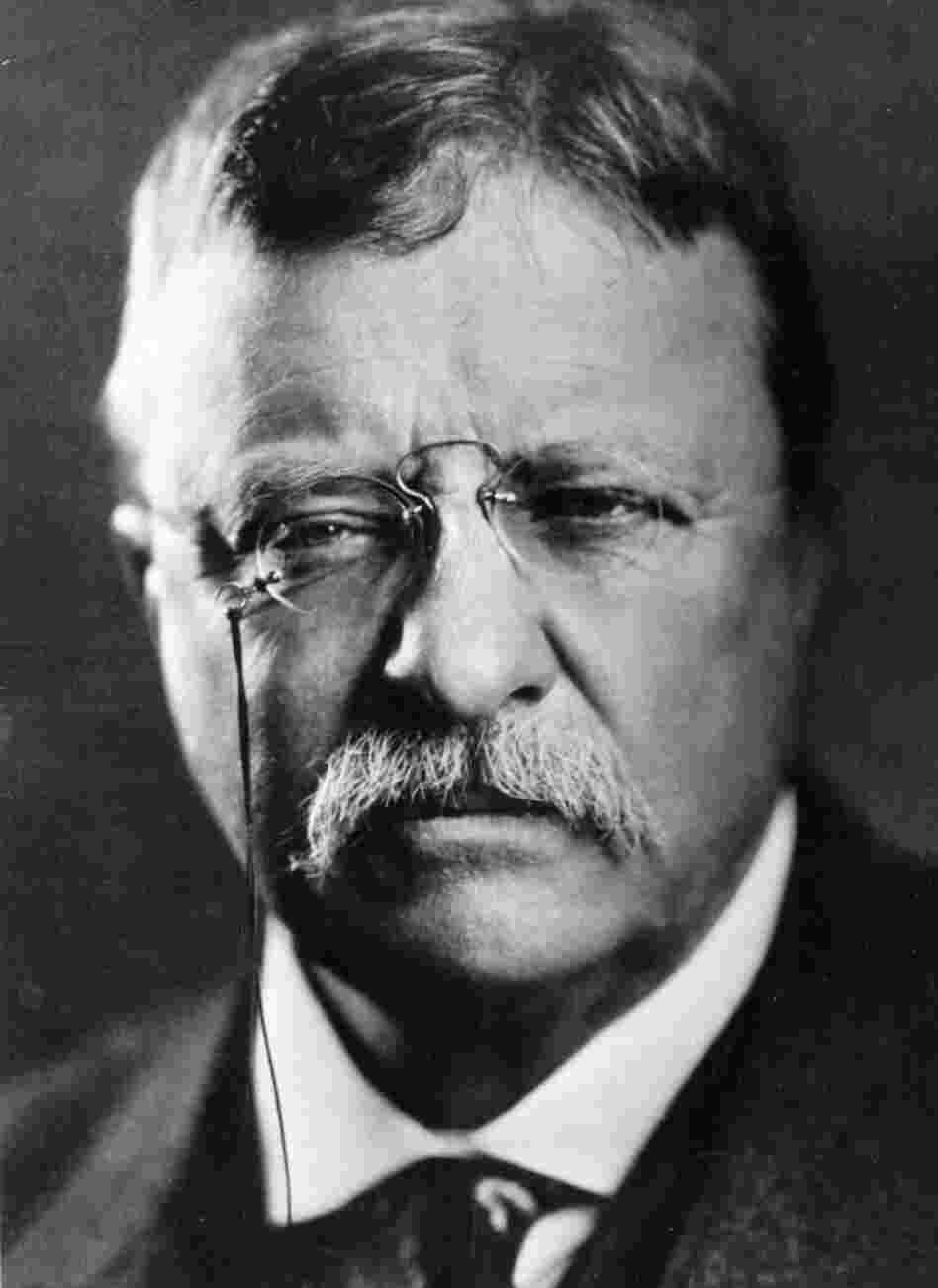
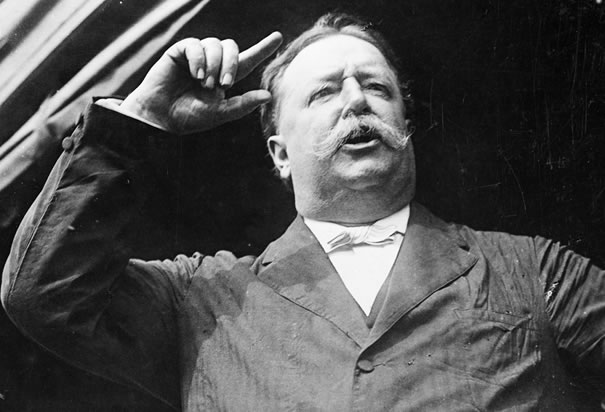


Pick one:


Friday, 18 January 2013
"Who of a certain age could forget when a bookish black woman named Anita Hill addressed a Senate committee of 14 white men..."
"... and candidly spoke of graphic sexual harassment by then-Supreme Court nominee Clarence Thomas? The explosive, race-tinged hearings in 1991 had all of America, especially black America, captivated. Sexual politics became part of the lexicon, and Hill became a divisive figure. We know what became of Thomas — now we get a rare glimpse into Hill's private life with friends and family, who stood by her through it all."
From "14 Films That Matter at Sundance" at The Root.
Read more ►
From "14 Films That Matter at Sundance" at The Root.
Thursday, 17 January 2013
"The toothbrush moustache (also called Hitler moustache, Charlie Chaplin moustache, 1/3 moustache, philtrum moustache, the postage stamp, or soul (mou)stache)..."
"... is a moustache, shaved at the edges, except for three to five centimeters above the centre of the lip. The sides of the moustache are vertical rather than tapered."
I found this Wikipedia article — "Toothbrush moustache" — last night after asserting that Hitler adopted the Hilter mustache to emulate Charlie Chaplin. The topic came up in connection with the array of photographs — Obama/Hitler/Stalin — that we're talking about in the previous post. Meade didn't believe me, and my belief — even if it's wrong — is at least common enough that I could easily do the research. (A couple weeks ago, the roles were reversed: Meade asserted a misconception common enough to have a Snopes article declaring it false.)
So, according to Wikipedia, the toothbrush mustache "originally became popular in America in the late 19th century."
There's a big sidetrack here about whether the taste for the modern — clean lines, low ornamentation — corresponds to a loss of individuality inherent in assembly line production. And we've got to get back to the question at hand: whether Hitler adopted the mustache to look like Chaplin. But I must take this sidetrack long enough to say that in the 1940 movie "The Great Dictator," when Chaplin exploits his resemblance to Hitler by playing a Hitler character and a Jewish man who looks like him, he concludes with a big speech that is mostly about overcoming, not fascism, but machines.
Now, back to the question: Did Hitler try to look like Chaplin? I'm sticking with the Rich Cohen article, because the writing is better than Wikipedia's generic style.
Read more ►
I found this Wikipedia article — "Toothbrush moustache" — last night after asserting that Hitler adopted the Hilter mustache to emulate Charlie Chaplin. The topic came up in connection with the array of photographs — Obama/Hitler/Stalin — that we're talking about in the previous post. Meade didn't believe me, and my belief — even if it's wrong — is at least common enough that I could easily do the research. (A couple weeks ago, the roles were reversed: Meade asserted a misconception common enough to have a Snopes article declaring it false.)
So, according to Wikipedia, the toothbrush mustache "originally became popular in America in the late 19th century."
It was a neat, uniform, low-maintenance style that echoed the standardization and uniformity brought on by industrialization, in contrast to the more flamboyant moustaches typical of the 19th century such as the Imperial, Walrus, Handlebar, Horseshoe, Pencil and Fantastico moustaches.Brought on by industrialization? Is that some stray unsupported — Marxist? — opinion that needs editing out of Wikipedia? There is a citation. It's to a 2007 Vanity Fair article by Rich Cohen called "Becoming Adolf" ("Hitler's Toothbrush mustache is one of the most powerful symbols of the last century, an inch of hair that represents infinite evil. The author had his reasons for deciding to wear one.") All Cohen says is that the toothbrush mustache was "a bit of modern efficiency," replacing the old style mustache, which paralleled the way "the old, monarchical world... was about to be crushed by the rising tide of assembly-line America."
There's a big sidetrack here about whether the taste for the modern — clean lines, low ornamentation — corresponds to a loss of individuality inherent in assembly line production. And we've got to get back to the question at hand: whether Hitler adopted the mustache to look like Chaplin. But I must take this sidetrack long enough to say that in the 1940 movie "The Great Dictator," when Chaplin exploits his resemblance to Hitler by playing a Hitler character and a Jewish man who looks like him, he concludes with a big speech that is mostly about overcoming, not fascism, but machines.
[M]achinery that gives abundance has left us in want.... More than machinery we need humanity.... Don't give yourselves to these unnatural men, machine men, with machine minds and machine hearts. You are not machines....(I've read Chaplin's Autobiography, and it is full of fretting about modern machines. (And in the movie "Modern Times," the Chaplin character goes nuts doing assembly line work and then gets caught up inside a big machine.))
Now, back to the question: Did Hitler try to look like Chaplin? I'm sticking with the Rich Cohen article, because the writing is better than Wikipedia's generic style.
Ron Rosenbaum, perhaps the only historian to give the mustache its proper due, fixes its appearance with confidence. "It was Chaplin's first, before Hitler's," he writes in an essay from The Secret Parts of Fortune. "Chaplin adopted a little black crepe blot beneath the nose for his Mack Sennett silent comedies after 1915, Hitler didn't adopt his until late 1919...."But, Cohen says, there's some conflicting material. Someone who served with Hitler in WWI wrote an essay saying he cut a bigger mustache down so it would fit under the gas mask. And then there's Hitler's sister-in-law Bridget.
Bridget Hitler was Irish and lived in Liverpool, where, according to the memoir, the young Adolf spent a lost winter.I'm reading this out loud and Meade shouts "The Fifth Beatle!" — which suggests a fantastico idea for a photoshop using this iconic early Beatles pic, adding Hitler, and dabbing the Fab Four with little black smudges across the philtrum. I continue with the dubious tale of Bridget Hitler:
Bridget (or whoever) says she often bickered with her brother-in-law. Because he was disagreeable, but mostly because she could not stand his unruly 'stache. In one of the great inadvertent summaries of historical character, she writes that in this, as in everything, he went too far.The year in question was 1912–13. So we're currently observing the 100th anniversary of the mustache, if Bridget Hitler — not the gas mask or Chaplin — inspired distinctive shaving. But we do know that...
[Hitler] was wearing the Toothbrush at the first Nazi meetings, when there were just a few people in a room full of empty chairs. One day, an early financial supporter of the Nazi Party advised Hitler to grow out his mustache. He did this delicately but firmly, in the manner of a man trying to protect an investment. The mustache made the Nazi look freakish. Hitler was advised to grow it at least "to the end of the lips." Hitler was a vain man, and you can almost feel him bristle. Here's what Hitler said: "If it is not the fashion now, it will be later because I wear it."The exact opposite became true: It can never be in fashion, because he wore it. You can't even indulge a love of Chaplin, because as Rich Cohen puts is: "If you dress like Chaplin, you run the risk of being mistaken for Hitler, as, if you dress like Evel Knievel, as I do when it rains, you run the risk of being mistaken for Elvis."
Ron Rosenbaum argues that the presence of Chaplin's 'stache on Hitler's face encouraged Western leaders to underestimate the Führer. "Chaplin's mustache became a lens through which to look at Hitler," he writes. "A glass in which Hitler became merely Chaplinesque: a figure to be mocked more than feared, a comic villain whose pretensions would collapse of his own disproportionate weight like the Little Tramp collapsing on his cane. Someone to be ridiculed rather than resisted."So, it can't be ascertained whether Hitler first shaved his mustache down because of Chaplin, but the resemblance to Chaplin certainly mattered. I think it's more likely that Hitler was not trying to look like Chaplin — even if it's true that Hitler — like most people — loved Chaplin. First: Why would a political leader choose to look like a clown? Even if it helped him to have some people not take him seriously, he needed to be taken seriously to acquire power. Second: The toothbrush mustache was a big fashion in Germany early enough that the New York Times published an item in 1907: "'Toothbrush' Mustache/German Women Resent Its Usurpation of the 'Kaiserbart.'"
"Man is naturally very ugly," [wrote one German woman.] "The only natural adornment he ever had was his mustache, and that he is now ruthlessly mutilating. Instead of the peaceful hirsute ornament of the past he is marring his face with a lot of bristles."Peaceful! An interesting association. To bristle is — I'm quoting the OED — "to display temper or indignation, to 'show fight.'" Imagine blaming the mustache. But that is how some people like to think. It's not the human being, but the inanimate thing that is the source of evil. Cohen lampoons that kind of thinking:
... I had seen Richard Dawkins, the author of The God Delusion, interviewed by Bill O'Reilly, who, citing Stalin and Hitler, said he thought atheists, because of their lack of restraining faith, were more susceptible to evil. To which Dawkins (in essence) replied: both Stalin and Hitler wore mustaches — do we therefore think the mustache was the cause of their behavior? I experienced this as an epiphany: By Jove! I said to myself. It was the mustache!
Tuesday, 15 January 2013
"Can a film be a masterpiece and still make you want to warn people not to see it?"
"Can a movie make you think that an artist has done something extraordinary, original, extremely difficult — and yet you cannot imagine yourself uttering the words, 'You’ve got to go see [blank]'?"
Read more ►
Sunday, 13 January 2013
"Rehearsals sap my pep... tell me what I have to do and I'll do it."
Said the actress Clara Bow (in 1929), who did it like this:

... in "Kittens" (1926). And this:

... in "Wings" (1927), which was the first movie to win the "Best Picture" Oscar. Bow said it was "a man's picture and I'm just the whipped cream on top of the pie." When Bow was criticized for her bohemian ways and "dreadful" manners, she said :
I'm reading about her this morning, after clicking to her Wikipedia page from the Wikipedia page "Pin-up girl," which has a list of "Notable pin-up girls" sorted by decades, beginning with the 1920s. I was researching the topic of pin-up girls after Meade called attention to this current ad:

We had a conversation about the nature of 1950s pin-up style, and it got me looking for the classic Betty Grable pin-up, which I think it emulates — peeking back over a raising shoulder and smiling as if to say Go ahead and look at my ass. Grable's pic is the one pic that appears on the Wikipidea "Pin-up girl" page, but I was interested in seeing the first pin-up, and the first couple names on the 1920s list didn't click through to a pin-up style picture. Clara Bow's did. If you count this:

Tell me what I have to do and I'll do it. She's only 15 there. Can you just hear the photographer directing her how to arrange her fingers and where to move her shoulder and even her eyeballs?
Read more ►
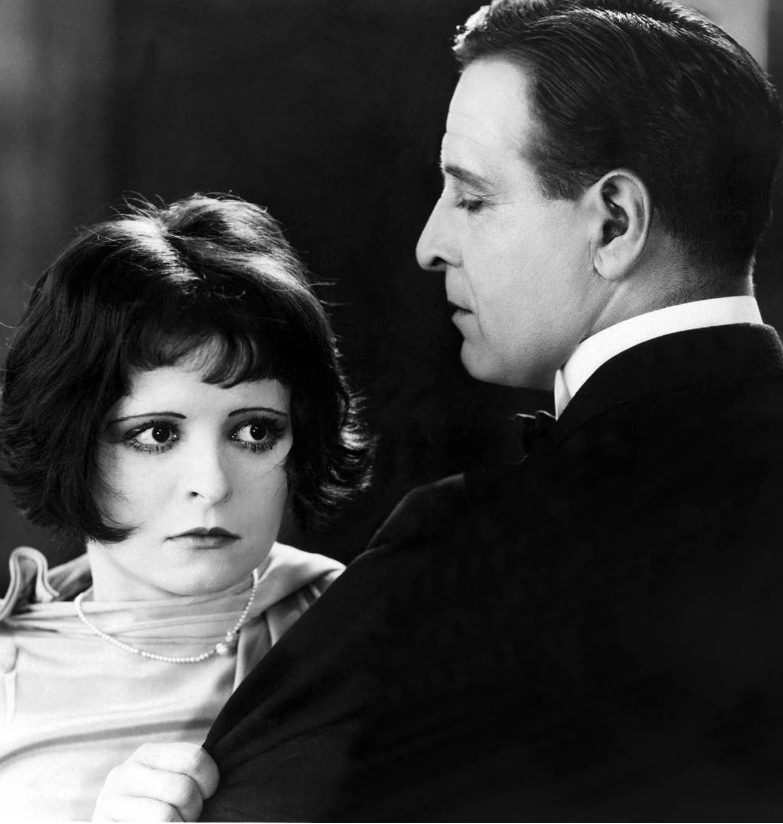
... in "Kittens" (1926). And this:
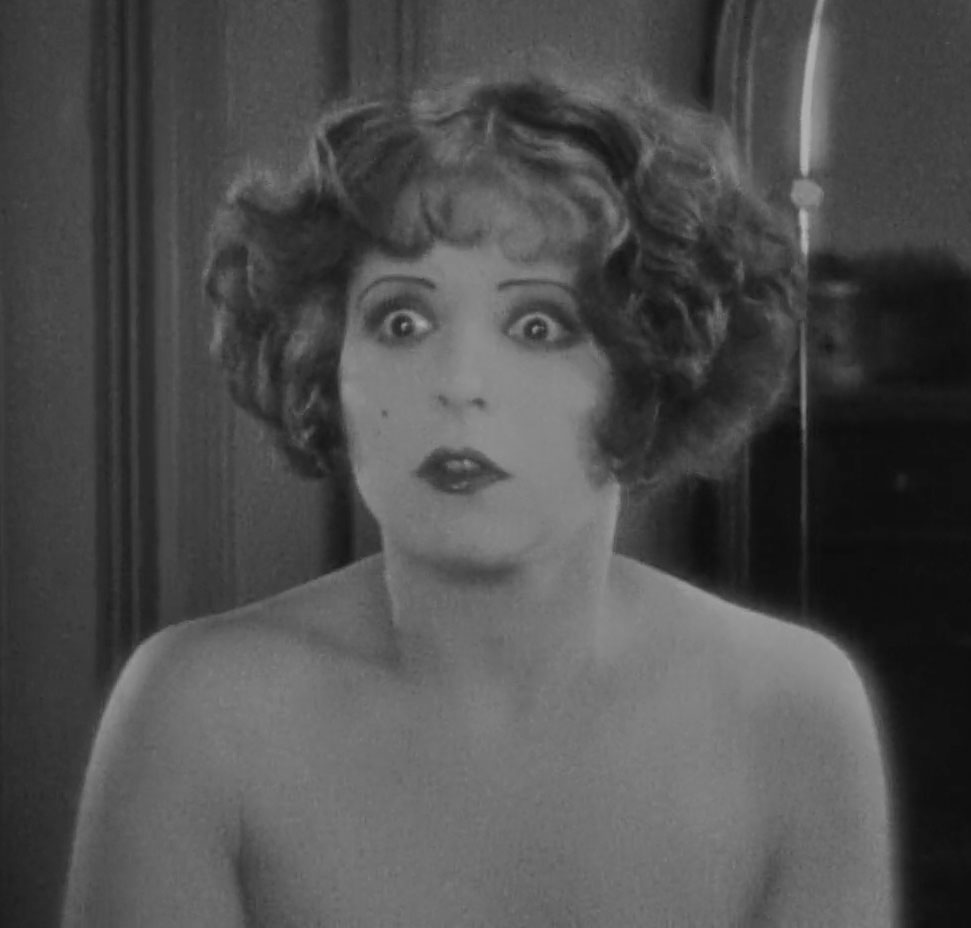
... in "Wings" (1927), which was the first movie to win the "Best Picture" Oscar. Bow said it was "a man's picture and I'm just the whipped cream on top of the pie." When Bow was criticized for her bohemian ways and "dreadful" manners, she said :
"They yell at me to be dignified. But what are the dignified people like? The people who are held up as examples of me? They are snobs. Frightful snobs... I'm a curiosity in Hollywood. I'm a big freak, because I'm myself!"In 1931, when she was 26, she got married and retired from acting. She moved to a ranch in Nevada, and lived until 1965.
I'm reading about her this morning, after clicking to her Wikipedia page from the Wikipedia page "Pin-up girl," which has a list of "Notable pin-up girls" sorted by decades, beginning with the 1920s. I was researching the topic of pin-up girls after Meade called attention to this current ad:

We had a conversation about the nature of 1950s pin-up style, and it got me looking for the classic Betty Grable pin-up, which I think it emulates — peeking back over a raising shoulder and smiling as if to say Go ahead and look at my ass. Grable's pic is the one pic that appears on the Wikipidea "Pin-up girl" page, but I was interested in seeing the first pin-up, and the first couple names on the 1920s list didn't click through to a pin-up style picture. Clara Bow's did. If you count this:
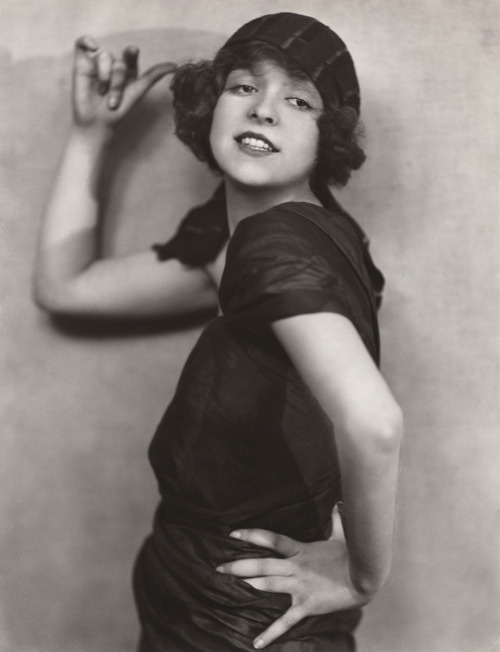
Tell me what I have to do and I'll do it. She's only 15 there. Can you just hear the photographer directing her how to arrange her fingers and where to move her shoulder and even her eyeballs?
Thursday, 10 January 2013
"Acting requires some intentionality on the part of the actor, some conscious effort to adopt a persona other than his or her own."
"Even adult actors who get criticized for 'playing themselves' are engaged in a series of more or less conscious decisions about how best to be themselves onscreen."
This morning, Quvenzhané Wallis got that Best Actress Oscar nod.
I loathe movies that exploit our instinctive urge to protect and care for children. The child is automatically that sweet and innocent character, whom the author sadistically torments for our sick pleasure.
Read more ►
A young child, meanwhile, likely isn't thinking at all about how to be herself, let alone a character. She's a kid, and she just "is." This is, of course, a big part of what we're responding to when we watch Wallis: her innocence and her lack of self-consciousness. She feels genuine precisely because she's incapable of being otherwise.From an article in The Atlantic a month ago titled "Sorry, Quvenzhané Wallis, but Best Actress Oscar Nods Are for Big Kids."
This morning, Quvenzhané Wallis got that Best Actress Oscar nod.
I loathe movies that exploit our instinctive urge to protect and care for children. The child is automatically that sweet and innocent character, whom the author sadistically torments for our sick pleasure.
Oscar nominations.
Here.
Observations: Quentin Tarantino punished. Who's Benh Zeitlin? Benh Zeitlin gets a director nomination and QT is out. Ben Affleck shunned as well.
"Zero Dark Thirty" punished.
The award ceremony is set up to be a solemn struggle between 2 inspiring models of virtue: Lincoln and Pi.
What is "Beasts of the Southern Wild"? Isn't that the question everyone's asking. Here:
"I see that I'm a little piece of a big big universe." Blech!
Obviously, it's Inspiration Year.
This is why I don't go to the movies.
Leave me alone, Hollywood.
Read more ►
Observations: Quentin Tarantino punished. Who's Benh Zeitlin? Benh Zeitlin gets a director nomination and QT is out. Ben Affleck shunned as well.
"Zero Dark Thirty" punished.
The award ceremony is set up to be a solemn struggle between 2 inspiring models of virtue: Lincoln and Pi.
What is "Beasts of the Southern Wild"? Isn't that the question everyone's asking. Here:
"I see that I'm a little piece of a big big universe." Blech!
Obviously, it's Inspiration Year.
This is why I don't go to the movies.
Leave me alone, Hollywood.
Tuesday, 8 January 2013
"Do you think it makes me a bad American to confess that I have no desire to see the movie Lincoln?"
A comic strip at The Soxaholix, which — I'm amused to see — has a link to my blog in the 4th frame. Plus, it goes on to explain why one ought to prefer watching sports.
Read more ►
"More intelligence and fewer offspring?"
"Perhaps Idiocracy was stating a more general rule...."
But another thing...
ADDED: Idiocracy primer:
Read more ►
But another thing...
When it comes to humans, for example, though our brains are only 2% of our bodies, they take up a whopping 20% of our energy requirements.If that's really true, it could be the key to why one person can eat heartily and never gain weight while the next person, eating the same thing, gets fat. Maybe it's a big brain/small brain distinction. Also, is it possible that instead of going to the gym or getting on a bicycle when we hope to lose weight, what we really should be doing is studying calculus or reading philosophy?
ADDED: Idiocracy primer:
Saturday, 5 January 2013
Al Pacino avoided meeting Phil Spector, whom he's portraying in an HBO movie.
"It would have been meeting a different person. Now he’s been convicted and he’s in prison. I play him before his first trial."
ADDED: In other HBO celebrity impersonation news:
Aw, give me a break. The studios turned down this movie because it was (whine) too gay? It's obviously insufficiently commercial.
Read more ►
After doing the film role, said Pacino, he didn’t feel he knew Spector much better – but that it didn’t matter, because his job was to explore the film character, not the real-life person.
“The play’s the thing,” said Pacino. “I was looking for the truth of the drama.”It's not an impersonation, but something much deeper. Or that's the PR for the HBO movie. Maybe it's a preemptive defense against the criticism that he doesn't seem like Spector at all.
ADDED: In other HBO celebrity impersonation news:
HBO’s new Liberace biopic was “too gay” for every studio in Hollywood, director Steven Soderbergh says.What big name actor will be probing the depths of the truth of the drama of Liberace? Matt Damon? No. Damon's playing Liberace's younger lover. Liberace will be... Michael Douglas!
Aw, give me a break. The studios turned down this movie because it was (whine) too gay? It's obviously insufficiently commercial.
Promos of the film screened for TV critic in Los Angeles yesterday contain numerous scenes of the two male stars shirtless and about to kiss.No one wants to see that. It's not anti-gay to say I don't want to see that. Who wants to see Michael Douglas shirtless and about to... do anything?
Friday, 4 January 2013
Dubbing in movie musicals fell into disrepute.
Present-day preference is for "real" screen actors, with an acceptance of their vocal imperfections. But in the old days:
Anyway, the new move "Les Miserables" has the actors singing, not lip-synching to their own or somebody else's vocals. Some people are annoyed by the low-quality singing, and I don't know how bad it is. I think my taste is for real actors singing, but I doubt if I'll see this movie. (I have seen the stage show.) My problem isn't the way actors sing. It's the way actors act. I don't know exactly why, but over the years, I grew less and less interested in seeing human beings pretend to be characters, and at some point, I started to find it actively annoying. I especially dislike long, tight closeups — as if every mediocre actor should be treated like Falconetti in "The Passion of Joan of Arc."
Actually, I can pinpoint the beginning of my awareness of this annoyance: a particular film that came out in 1997. Once you let yourself see that maybe you don't like something that you've assumed you love — people love movies — then all sorts of distracting perceptions disrupt your pleasure. The end stage is: You anticipate these disruptions and become so averse to them that you resist the experience altogether. The question becomes: Why should you spend time at the movies? Time is precious. The default position is: No.
Read more ►
Classically trained singers like Betty Noyes, Betty Wand, and Marni Nixon made careers out of singing for some of Hollywood’s most famous actresses, including Audrey Hepburn and Leslie Caron. One of the greatest movie musicals, West Side Story, dubbed three of its leads—Natalie Wood, Richard Beymer, and Rita Moreno—because their voices weren’t trained for the operatic score. The film was better for it. (Russ Tamblyn and George Chakiris, whose singing was not dubbed, had less challenging vocal parts.) Similarly, the men behind Singin’ in the Rain, a movie partly about dubbing in the movies, had no problem dubbing Debbie Reynolds for a couple of songs. The King and I, Gigi, and My Fair Lady are other prominent musicals that used dubbing without shame.Everything in those old movies was more "false," but within n comprehensive environment of falseness, it made sense. It's false that people are singing at all. There's falseness to any stage show. But in a stage show, the actors are really singing, not lip-synching. I'd rather not watch lip-synching, whether it's the actor's own voice or not.
Anyway, the new move "Les Miserables" has the actors singing, not lip-synching to their own or somebody else's vocals. Some people are annoyed by the low-quality singing, and I don't know how bad it is. I think my taste is for real actors singing, but I doubt if I'll see this movie. (I have seen the stage show.) My problem isn't the way actors sing. It's the way actors act. I don't know exactly why, but over the years, I grew less and less interested in seeing human beings pretend to be characters, and at some point, I started to find it actively annoying. I especially dislike long, tight closeups — as if every mediocre actor should be treated like Falconetti in "The Passion of Joan of Arc."
Actually, I can pinpoint the beginning of my awareness of this annoyance: a particular film that came out in 1997. Once you let yourself see that maybe you don't like something that you've assumed you love — people love movies — then all sorts of distracting perceptions disrupt your pleasure. The end stage is: You anticipate these disruptions and become so averse to them that you resist the experience altogether. The question becomes: Why should you spend time at the movies? Time is precious. The default position is: No.
Monday, 31 December 2012
Subscribe to:
Comments (Atom)


