Paul Krugman responds to the pushback he's received on "the trillion-dollar-coin thing":There seem to be two kinds of objections. One is that it would be undignified. Here’s how to think about that....
The professor is about to teach us how to think. Get ready!
... we have a situation in which a terrorist may be about to walk into a crowded room and threaten to blow up a bomb he’s holding.
Okay. A hypothetical. I'm up for hypotheticals. And it's an analogy, because the trillion-dollar-coin thing isn't promoted as a solution to terrorism. But terrorism is something that you can picture quite concretely and you understand it as very real and scary — unlike the debt ceiling problem which is awfully abstract. (Even to say "ceiling" is to resort to metaphor.)
So, anyway:
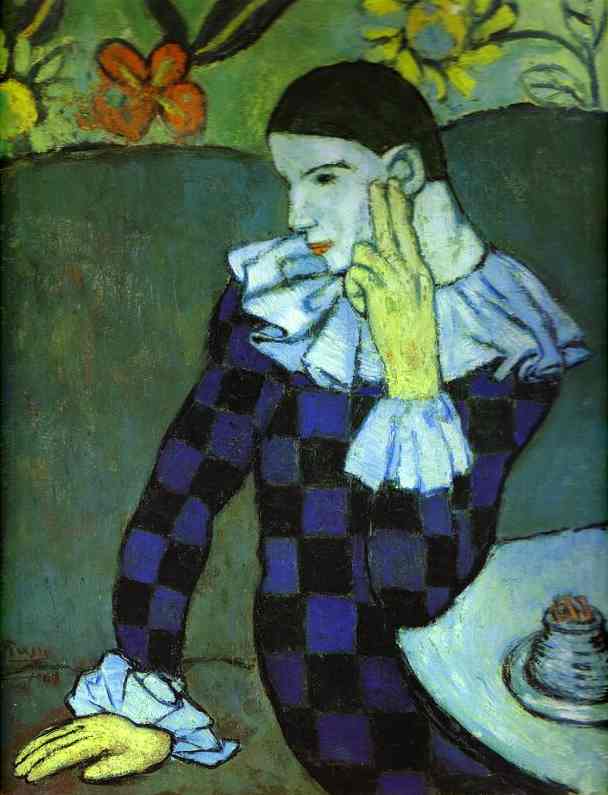
It turns out, however, that the Secret Service has figured out a way to disarm this maniac — a way that for some reason will require that the Secretary of the Treasury briefly wear a clown suit. (My fictional plotting skills have let me down, but there has to be some way to work this in).
In this hypothetical, you have to accept that the Secret Service has found "a way." It
will work. The professor is telling you how to think, so you're going off track if you want an explanation for
why that would work or if you — much more likely — would be thinking what the hell is going on in this country when the people in charge are figuring out solutions involving clown suits and believing that clown-suit solutions work? Krugman reveals that he knows his hypothetical is horribly flawed, and he tries to paper it over by confessing to second-rate "plotting skills."
There has to be some way to work this it. The professor is teaching us how to think —
use this analogy — but he can't piece together the hypothetical. How's that supposed to help us think?
He continues:
And the response of the nervous Nellies is, “My god, we can’t dress the secretary up as a clown!” Even when it will make him a hero who saves the day?
Wait. The normal people who go with the working theory that the government has gone mad are "nervous Nellies"? Yes, because Krugman's hypothetical locks it in that the solution works. So the people aren't supposed to be thinking
that sounds crazy. It's posited that they know it will work, so all they can realistically be concerned with is that the secretary will
look undignified dressed like a clown.
Krugman turns to the second objection, as if it's unconnected to the first one:
The other objection is the apparently primordial fear that mocking the monetary gods will bring terrible retribution.
Why weren't the people who say it looks crazy credited with having some fear that it wouldn't work? Because in the clown-suit hypothetical it was posited that it
would work? These "nervous Nellies" were mocked in Part I of Krugman's krushing of all adversaries. In Part II, we see troglodytes who imagine a "god" who will punish us for doing something wrong.
What the hysterics see is a terrible, outrageous attempt to pay the government’s bills out of thin air. This is utterly wrong, and in fact is wrong on two levels.
The first level is that in practice minting the coin would be nothing but an accounting fiction, enabling the government to continue doing exactly what it would have done if the debt limit were raised....
So it's a trick, but it's not that different from other tricks. It's just weirder looking. Like a clown suit. Which gets back to the point I made when
I criticized Krugman a couple days ago:
It's strange that it's come to this, but I don't believe the President of the United States would choose to do something that will strike the people as so bizarre, even if he feels capable of articulating the legal theory with a straight face. The President must maintain the people's trust and confidence. He must be comprehensible as normal, sound, and sane to ordinary folks.
Krugman's response to these ordinary folks — the people upon whom the President's power depends — is: They're hysterical and ill-informed. Well, how did this President — how does any President — get elected in the first place? It was by generating
confidence. He's a con man. Let's say the management of the national debt has been a lot of trickery for a long, long time. What then does it matter if we do something that is quite obviously a trick, that everyone will
see as a trick?
Does the trick work if the magician points to the hand that's doing the sleight?