Monday, 28 January 2013

"From medieval times until the end of the 19th century, the region of Burkina Faso was ruled by the empire-building Mossi people..."

0 comments
"... who are believed to have come up to their present location from northern Ghana, where the ethnically-related Dagomba people still live. For several centuries, Mossi peasants were both farmers and soldiers; as the Mossi Kingdoms successfully defended their territory, indigenous religious beliefs, and social structure against forcible attempts to conquer or convert them to Islam by Muslim peoples from the northwest."

Burkina Faso is today's "History of" country.


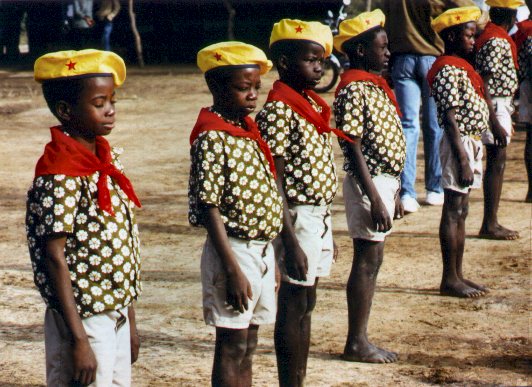
More recently, children of the 1983-1987 revolution: 

Read more ►

Thursday, 24 January 2013

Hey, kids, here's a way to have fun in your American history class...

0 comments
... if you've got a teacher who admires Hillary Clinton. Whatever the lesson of the day is, raise your hand, and when you're called on, throw your hands in the air and cry out: "What difference at this point does it make?!"

I like the way Meade puts it over at the Isthmus forum:
What difference, at this point, does it make?

2007 troop surge in Iraq?... What difference, at this point, does it make?

Yellowcake uranium in Niger?... What difference, at this point, does it make?

Asking for a Florida recount in only select counties instead of statewide?...What difference, at this point, does it make?


Claiming weapons of mass destruction as a reason for using military force?... What difference, at this point, does it make?

Having sexual relations with that woman?... What difference, at this point, does it make?

Trading arms for hostages?... What difference, at this point, does it make?

Allowing the Shah of Iran into the United States to undergo surgical treatment at the New York–Weill Cornell Medical Hospital?... What difference, at this point, does it make?

Covering up a third-rate burglary?... What difference, at this point, does it make?

Lying to Congress and the American people about an incident in the Gulf of Tonkin in order to escalate military involvement in Vietnam?... What difference, at this point, does it make?

Ordering an invasion of the Bay of Pigs?... What difference, at this point, does it make?

Bombardment of Fort Sumter?... What difference, at this point, does it make?

Allowing slavery to continue in the Louisiana Territory ?... What difference, at this point, does it make?

Destruction of tea belonging to the East India Company?... What difference, at this point, does it make?
Read more ►

Gallup poll: 64% of Americans agree that "The decision to have an abortion should be made solely by a woman and her physician."

0 comments
In the summer of 1972, half a year before the Supreme Court decided Roe v. Wade.
A majority of all identified groups, including Catholics, agreed with that statement. There was almost no difference between men and women. The group expressing the strongest agreement – 68 percent – was made up of Republicans. George Gallup’s syndicated column discussing the poll results, “Abortion Seen Up to Woman, Doctor,” ... was... in Justice Blackmun’s files.
And Justice Blackmun, the Nixon appointee who wrote the Roe v. Wade opinion, had that column in his files. Also in his files:
[A]n account by Dr. Jane E. Hodgson, a Mayo Clinic-trained obstetrician/gynecologist, of her arrest in St. Paul in 1970 for performing a first-trimester abortion for a patient who had contracted German measles in the fourth week of pregnancy. (In those days before immunization eradicated the threat posed to pregnant women by German measles, the disease commonly caused serious birth defects.) Justice Harry A. Blackmun, formerly the Mayo Clinic’s lawyer, knew Dr. Hodgson’s story; I had found her account, published in the clinic’s alumni magazine, in the justice’s files at the Library of Congress.
That's from a long column by Linda Greenhouse, referencing historical materials collected here. The column also talks about the post-Roe political strategy of the Republican Party, which we were just discussing a couple days ago here. The idea is that Republicans were for it before they were against it.

(Feel free to relate this post to the previous post about Second Amendment rights, which Democrats don't believe in.)
Read more ►

Wednesday, 23 January 2013

Roman Empire-era stones, long thought to be gaming pieces, turn out to be ass-wipers.

0 comments
Or that's the new theory in the British Medical Journal. It's not as if there's ancient poop on them. They've just decided to present them differently. Instead of hey, kids, the Romans played checkers, it's hey, kids, can you imagine wiping yourself with a rock. And the kids all go EEEWWW!!! which the adults take as a sign of gratitude for the trip to the Fishbourne Roman Palace museum in West Sussex, England.

The museum curator,  Dr. Rob Symmons, said: "I love the idea we've had these in the museum for 50 years being largely ignored and now they are suddenly engaging items you can relate to."

I wonder what other museum labels could be tweaked to pique the imagination of the younger generation.
"They would have probably been quite scratchy to use and I doubt they would be as comfortable as using toilet (paper)," Symmons said. "But in the Roman era it was that or very little else."
Like the Romans were cavemen! From Bill Bryson's wonderful book "At Home: A Short History of Private Life":
The Romans were particularly attached to the combining of evacuation and conversation. Their public latrines generally had twenty seats or more in intimate proximity, and people used them as unselfconsciously as modern people ride a bus. (To answer an inevitable question, a channel of water ran across the floor in front of each row of seats; users dipped sponges attached to sticks into the water for purposes of wiping.) 
Maybe the stones were for taking a first pass, and the sponging followed. But let's not picture this dry scraping. The Romans had water galore. They were up to their asses in water. Bryson writes:
The Romans loved water altogether—one house at Pompeii had thirty taps—and their network of aqueducts provided their principal cities with a superabundance of fresh water. The delivery rate to Rome worked out at an intensely lavish three hundred gallons per head per day, seven or eight times more than the average Roman needs today.
I'm going to posit that the Romans would find our reliance on paper pathetic and Symmons's sniffing untoward.
Read more ►

Tuesday, 22 January 2013

40 years ago today, the Supreme Court issued its opinion in Roe v. Wade.

0 comments
Justice Blackmun wrote:
The Constitution does not explicitly mention any right of privacy. In a line of decisions, however... the Court has recognized that a right of personal privacy, or a guarantee of certain areas or zones of privacy, does exist under the Constitution. In varying contexts, the Court or individual Justices have, indeed, found at least the roots of that right in the First Amendment.... or in the concept of liberty guaranteed by the first section of the Fourteenth Amendment.... These decisions make it clear that only personal rights that can be deemed "fundamental" or "implicit in the concept of ordered liberty"...  are included in this guarantee of personal privacy....

This right of privacy, whether it be founded in the Fourteenth Amendment's concept of personal liberty and restrictions upon state action, as we feel it is, or, as the District Court determined, in the Ninth Amendment's reservation of rights to the people, is broad enough to encompass a woman's decision whether or not to terminate her pregnancy. The detriment that the State would impose upon the pregnant woman by denying this choice altogether is apparent. Specific and direct harm medically diagnosable even in early pregnancy may be involved. Maternity, or additional offspring, may force upon the woman a distressful life and future. Psychological harm may be imminent. Mental and physical health may be taxed by child care. There is also the distress, for all concerned, associated with the unwanted child, and there is the problem of bringing a child into a family already unable, psychologically and otherwise, to care for it. In other cases, as in this one, the additional difficulties and continuing stigma of unwed motherhood may be involved. All these are factors the woman and her responsible physician necessarily will consider in consultation.
Was the state's interest in protecting the unborn child sufficient to permit some regulation? The answer was yes, but not before the "viability" of the unborn. As to whether the killing of that pre-viable entity ought to be seen as the killing of a human being, justifying rescue by the state, the Court refused "to endorse any theory that life, as we recognize it, begins before live birth," since "those trained in... medicine, philosophy, and theology are unable to arrive at any consensus."

Pre-viability, the decision whether to continue with a pregnancy would rest with the woman within whose body the mysterious process was taking place, and it would not be the role of the state to make that decision for her, no matter how firmly the majority of the people believe they have solved the mystery and they know that what she is doing is murdering a child.
Read more ►

Saturday, 19 January 2013

"I don’t think we should talk about Lincoln’s underwear..."

0 comments
"It’s not appropriate for someone so iconic. Even in the bedroom, Lincoln is never shown in his pajamas. He’s in his shirt and pants."

Joanna Johnston, movie costume designer.

***

"But even the President of the United States/Sometimes must have to stand naked."

Bob Dylan.

***

"How many Bob Dylan songs have the word 'naked' and how many of them can you name?" I challenge Meade with a Bob Dylan test, as I tend to do when I've done a search at bobdylan.com (as I did for the "It's Alright Ma" quote, above).

Meade immediately says "even the President of the United States sometimes must have to stand naked," then none of the others — not even "You see somebody naked and you say who is that man?" — and makes 2 wrong guesses:
MEADE: "'Mr. Tambourine Man'... just to dance beneath the naked sky..."

ME: "That's 'diamond sky.'"

MEADE: "The one where the farmer is chasing him out of his house."

ME: "'Motorpsycho Nightmare?' No."
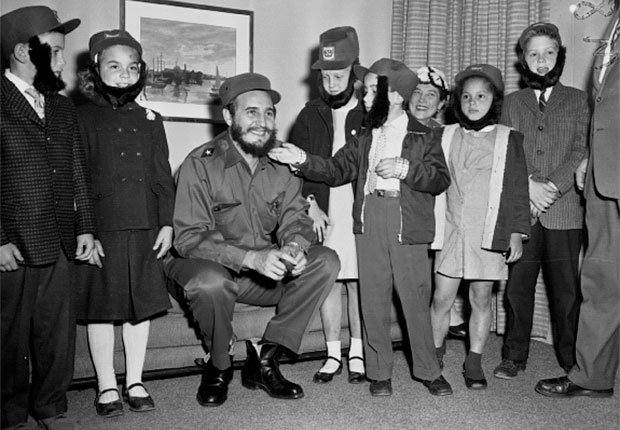
In "Motorpsycho Nightmare," Bob Dylan is just trying to get some sleep — no sign that he's sleeping naked — when Rita — "Lookin’ just like Tony Perkins" (i.e., the murderer in "Psycho") importunes him to take a shower. He's freaked out: "Oh, no! no! I’ve been through this [movie] before." Afraid of getting knifed to death, but unwilling to run off unless her father (the farmer) throws him out (because he promised the farmer he'd milk the cows in the morning), his sees his only option as saying "something to strike him very weird." What he says is: "I like Fidel Castro and his beard."


Beards. Fidel Castro made a beard as off limits to an American president — in spite of Lincoln — as Hitler made the mustache. And here I want to go back to that "Becoming Adolf" article by Rich Cohen that were were talking about a couple days ago:
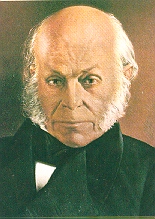
[Y]ou could not wear any kind of mustache after [WWII], because, running from Hitler, you might run into Stalin. Hitler plus Stalin ended the career of the mustache in Western political life. Before the war, all kinds of American presidents wore a mustache and/or beard. You had John Quincy Adams, with his muttonchops...


You had Abe Lincoln, whose facial hair...


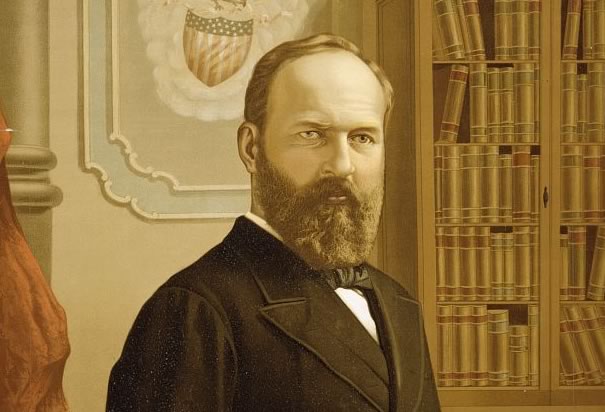
... like his politics, was the opposite of Hitler's: beard full, lip bare. You had James Garfield, who had the sort of vast rabbinical beard into which whole pages of legislation could vanish.


You had Rutherford B. Hayes...


Grover Cleveland...


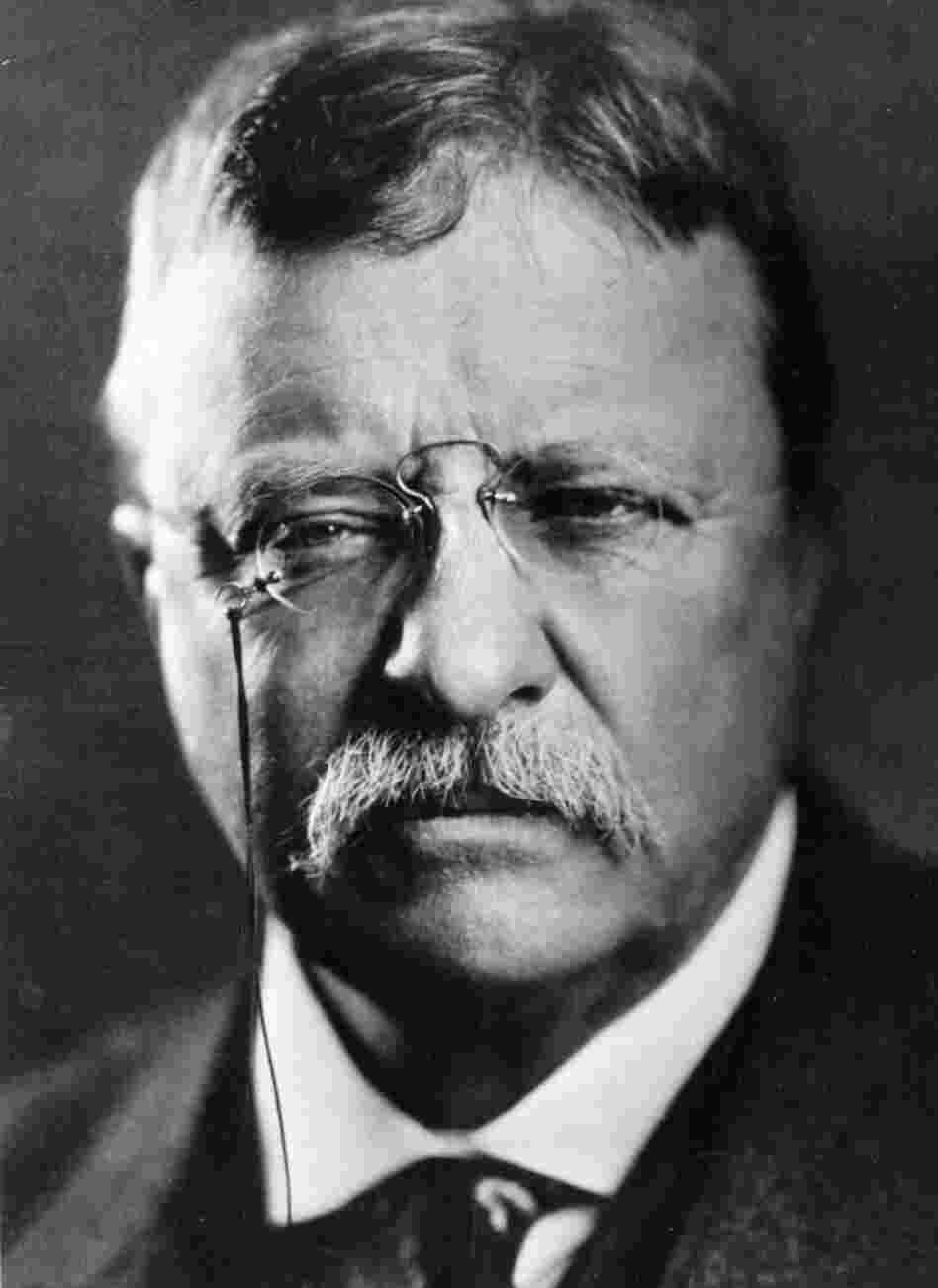
... and Teddy Roosevelt, whose asthma and elephant gun were just a frame for his mustache.


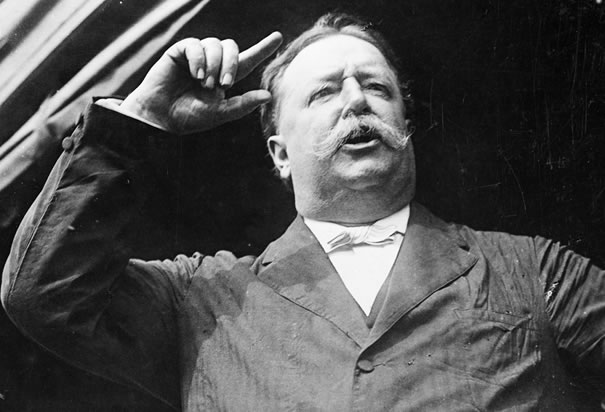
You had William Howard Taft — the man wore a Walrus!


After the war, the few American politicians who still wore a mustache were those who had made their name before Hitler and so had been grandfathered in. Like Thomas Dewey.


Dewey was Eliot Spitzer. He was a prosecutor in New York in the 1930s (and later governor), the only guy with the guts to take on the Mob. For Dewey, the rise of Hitler was a fashion disaster. Because Dewey wore a neat little mustache. Dewey ran for president twice — losing to F.D.R., losing to Truman. In my opinion, without the mustache, the headline in the Chicago Daily Tribune (Dewey Defeats Truman) turns true. One of the few prominent American politicians to wear facial hair in recent memory is Al Gore, who grew a Grizzly Adams beard after he lost to George Bush, in 2000. The appearance of this beard was taken to mean either (1) Gore would never again run for office, or (2) Gore had gone completely mental.


The decision to grow a mustache or a beard is all by itself reason to keep a man away from the nuclear trigger.
Are we going to decide who deserves out trust based on they look? Come on, Abe. Lose the beard. Okay.

Pick one:

Read more ►

Friday, 18 January 2013

"American Diversity" class insufficiently heartwarming for some Wisconsin parents.

0 comments
Daily Mail brings news of a local high school where kids were taught that "minorities had historically been oppressed by white people."
According to handouts..., 'white privilege' in the class was defined as a 'set of advantages that are believed to be enjoyed by white people beyond those commonly experienced by non-white people in the same social, political, and economic spaces...'....
[One] parent became alarmed after seeing the handouts provided to her 18-year-old son... “I felt it was indoctrination,” she said. “This is a radical left agenda and ideology that is now embedded in our school.”
I hate the use of schools for to indoctrinate children, but what exactly is the problem here? The students should be taught American history, and racial oppression is a big part of telling the story fairly and accurately. Maybe the name of the class — "American Diversity" — is misleading, in that it suggests a happy rainbow. That said, I'm not surprised to see parents fretting that the teachers are doing political indoctrination. I understand and share this mistrust.
Read more ►

Thursday, 17 January 2013

"Throughout their existence as a separate culture, Ruthenians formed in most cases rural population, with the power held by local szlachta and boyars..."

0 comments
"... often of Lithuanian, Polish or Russian descent. As in the rest of Central and Eastern Europe, the trade and commerce was mostly monopolized by Jews, who formed a significant part of the urban population."
Since the Union of Horodlo of 1413, local nobility was assimilated into the traditional clan system by means of the formal procedure of adoption by the szlacht... Initially mostly Ruthenian and Orthodox, with time most of them became polonized. This was especially true for major magnate families... whose personal fortunes and properties often surpassed those of the royal families and were huge enough to be called a state within a state. Many of them founded their own cities... with settlers from other parts of Europe. Indeed there were Scots, Germans and Dutch people inhabitating major towns of the area, as well as several Italian artists who had been "imported" to the lands of modern Belarus by the magnates.
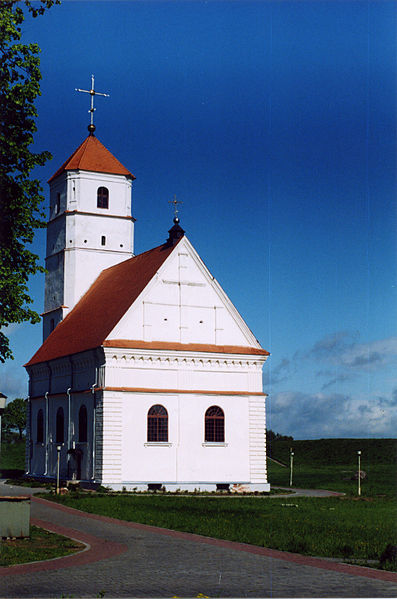
Have you thought about Belarus, today's "History of" country?

Read more ►

Wednesday, 16 January 2013

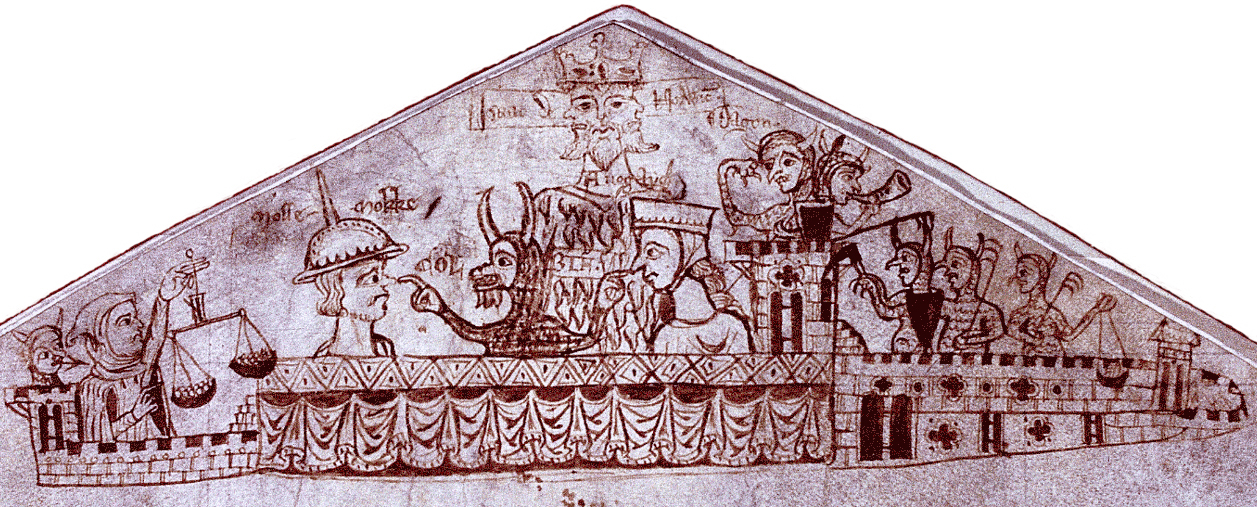
A cartoon from 1233.

0 comments


I'm fascinated by the school lesson material at the U.K. National Archive site. That cartoon is from one titled "A Medieval Mystery" that asks students to "decode the dark secrets of this cartoon" and offers tips on things to look for (e.g., devils) and prompts with questions like "How has the cartoonist shown that the man and the woman are Jewish?"
Read more ►

"By 1666 at least 12,000 white smallholders had been bought out, died," or left Barbados.

0 comments
"Many of the remaining whites were increasingly poor. By 1680 there were seventeen slaves for every indentured servant. By 1700, there were 15,000 free whites and 50,000 enslaved blacks."
... The British abolished the slave trade in 1807, but not the institution itself. In 1816, slaves rose up in the largest major slave rebellion in the island's history. Twenty thousand slaves from over seventy plantations rebelled. They drove whites off the plantations, but widespread killings did not take place. This was later termed "Bussa's Rebellion" after the slave ranger, Bussa, who with his assistants hated slavery, found the treatment of slaves on Barbados to be "intolerable," and believed the political climate in the UK made the time ripe to peacefully negotiate with planters for freedom... Bussa's Rebellion failed. One hundred and twenty slaves died in combat or were immediately executed; another 144 were brought to trial and executed; remaining rebels were shipped off the island...
Slavery was abolished in 1834 in Barbados, today's "History of" country.

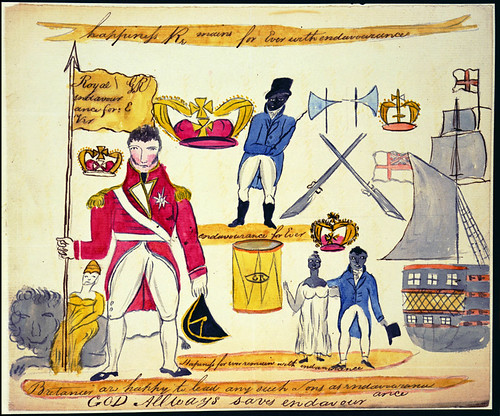
ADDED: Here— at the U.K. National Archives website — is a school lesson on Bussa's rebellion, with nice scannings of original documents for students to read. And here's a drawing taken from the rebels that "appears to stress the rebels' loyalty to Britain and to the Crown while conveying their earnest desire for liberty."

God always saves endavour
Read more ►

Saturday, 12 January 2013

"The cave of Azykh in the territory of the Fizuli district in the Republic of Azerbaijan..."

0 comments
"...is considered to be the site of one of the most ancient proto-human habitations in Eurasia."


"The influence of ancient peoples and civilizations including the Sumerians and Elamites came to a crossroads in the territory of Azerbaijan.... In the 8th century BCE, the semi-nomadic Cimmerians and Scythians settled in the territory.... The Assyrians also had a civilization that flourished to the west of Lake Urmia in the centuries prior to creation of Media and Albania."

Today's "History of" country is Azerbaijan. 
Read more ►

Friday, 11 January 2013

"The ordinary people were not happy. They loathed the Emperor's interference in every detail of their daily lives."

0 comments
"Why should they be forbidden to bake ginger-bread just because Joseph thought it bad for the stomach? Why the Imperial edict demanding the breast-feeding of infants? Why the banning of corsets? From these and a thousand other petty regulations, enforced by a secret police, it looked to the Austrians as though Joseph were trying to reform their characters as well as their institutions. Only a few weeks before Joseph's death, the director of the Imperial Police reported to him: 'All classes, and even those who have the greatest respect for the sovereign, are discontented and indignant.'"

From the History of Austria. Joseph II, who ruled from 1780 to 1790.


Austria is our "History of" country today, as we proceed through the 206 countries of the world using the Wikipedia summaries. So much has happened in Austria over the ages. The "History of" project cannot begin to summarize the summary. I merely offer up a snippet, one thing that struck me as something that might have particular resonance. But it is only one of many things. For example, from 25,000 BC:

Read more ►

Tuesday, 8 January 2013

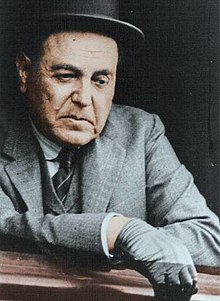
Let's begin with Hipólito Yrigoyen.

0 comments
The Radical:


The Radicals took over in 1916, after years of conservative power, in the first election after the beginning of universal male suffrage in...


... Argentina, our "History of" country today. Wikipedia's History of page for Argentina is way too long for me even to consider summarizing. I feel as weary as Hipólito Yrigoyen looks in that picture. And the information looks too much like a list of all the many people who have held the leadership position in Argentina. So I'm afraid I must skip arbitrarily over all of this to find 5 things that seem interesting to me.

1. "Europeans first arrived in the region with the 1502 voyage of Amerigo Vespucci."

2. "The United Kingdom officially recognized Argentine independence in 1825, with the signing of a Treaty of Friendship, Commerce, and Navigation on February 2..."

3. "During the early 1920s, the rise of the anarchist movement, fueled by the arrival of recent emigres and deportees from Europe, spawned a new generation of left-wing activism in Argentina. The new left, mostly anarchists and anarcho-communists, rejected the incremental progressivism of the old Radical and Socialist elements in Argentina in favor of immediate action."

5. "In 1946 General Juan Perón became president; his populist ideology became known as peronism. His popular wife Eva Perón played a leading political role until her death in 1952."

6. "In the late 1960s and the early 1970s, Marxist-Leninist militias such as People's Revolutionary Army utilized aggressive tactics that sometimes resulted in violence. Later the military government used these acts as justification for their even more brutal measures.... Serious economic problems, mounting charges of corruption, public discontent and, finally, the country's 1982 defeat by the United Kingdom in the Falklands War following Argentina's unsuccessful attempt to seize the Falkland Islands all combined to discredit the Argentine military regime."
Read more ►

Monday, 7 January 2013

Archaic People, Saladoid people, Arawaks, Caribs...

0 comments
I'm trying to read the "History of" page for Antigua and Barbuda, which is a single country. It's today's country as we run through the list of 206 countries in the world. But this Wikipedia page is kind of a mess. There are names of various people who arrived in succeeding waves, mostly, it seems, paddling from Venezuela. I'm not quite picturing how one group "replaced" or "succeeded" another. But the earliest people were there by around 2900 BC. These were the "archaic people."
The Catholic Encyclopedia does make it clear that the European invaders had some difficulty identifying and differentiating between the various native peoples they encountered.
So maybe it's not just a Wikipedia problem. But you'd think by now they'd have sorted out who replaced whom, when, and how. Maybe not. Maybe my expectations for archaeology are excessive. And then there's the question: how/why did they leave?

No researcher has conclusively proven any of these causes as the real reason for the destruction of West Indian natives.
Christopher Columbus arrived in 1493, but the Caribs defended themselves. It was England that colonized the islands 1632.
Settlers raised tobacco, indigo, ginger, and sugarcane as cash crops.... [T]he sugar industry became so profitable that many farmers replaced other crops with sugar, making it the economic backbone of the islands. 
The English brought in African slaves to work in the sugar plantations.
During the 18th century, Antigua was used as the headquarters of the British Royal Navy Caribbean fleet....
... Antiguan slaves were emancipated in 1834, but remained economically dependent upon the plantation owners....

The islands achieved independence from the United Kingdom in 1981, becoming the nation of Antigua and Barbuda. It remains part of the Commonwealth of Nations, and remains a constitutional monarchy, with Queen Elizabeth II as Queen of Antigua and Barbuda.
Read more ►

Sunday, 6 January 2013

What's the difference between Kwanzaa and Kwanza?

0 comments
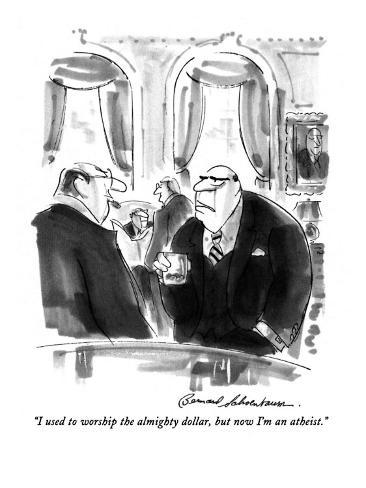
Kwanzaa is that religionish holiday we were just talking about. Kwanza is the unit of currency in Angola, our "History of" country today. Before getting to the history of Angola, I pause to think of the holidays we could invent by taking the names of the world currencies. Here's a list of the currencies currently circulating in the world. Following the Kwanzaa model, you could add a letter or change the word slightly as you take off on your flight of inspirational fancy. Now, what should we do for Dollaro? Worship the Almighty Dollar is a common enough phrase.


But let's get back to the history of Anglola, as quickly scanned via the "History of Angola" Wikipedia page, in accordance with our 206-day project. The name Angola comes from "N'gola," the Kimbundu word for king.

The first ones to settle were the Bushmen, great hunters, similar to Pygmies in stature. This changed at the beginning of the sixth century AD, when the Bantu, already in possession of metal-working technology, ceramics and agriculture began one of the greatest migrations in history.... The first large political entity in the area, known to history as the Kingdom of Kongo, appeared in the thirteenth century and stretched from Gabon in the north to the river Kwanza in the south, and from the Atlantic in the west to the river Cuango in the east....
In 1482, the Portuguese arrived:
The Portuguese colony of Angola was founded in 1575 with the arrival of Paulo Dias de Novais with a hundred families of colonists and four hundred soldiers. Luanda was granted the status of city in 1605....

After undertaking various journeys [Queen Jinga] succeeded in 1635 in forming a grand coalition with the states of Matamba and Ndongo, Kongo, Kassanje, Dembos and Kissamas. At the head of this formidable alliance, she forced the Portuguese to retreat.

Meanwhile, Portugal had lost its King and the Spanish took control of the Portuguese monarchy....  Jinga entered into an alliance with the Dutch...  In 1648, after Portugal has regained its independence from the Spanish rulers... a large Portuguese force from Brazil under the command of Salvador Correia de Sá retook Luanda, leading to the return of the Portuguese in large numbers.
The Portuguese took over again and stayed until 1975, after a coup d'etat in Portugal that installed President António de Spínola.
The Spínola government agreed to give all of Portugal's colonies independence, and handed power in Angola over to a coalition of the three largest separatist movements, the MPLA, UNITA, and the FNLA, through the Alvor Agreement. The coalition quickly broke down, however, and the country descended into civil war....
Cuba involved itself, and the U.S. had difficulties with that involvement. An accord was signed in 1988 and another in 1991. There were democratic elections, but the results were questioned and more war followed. It seems that the conflict ended 2002.
Read more ►

Saturday, 5 January 2013

"In the mountains of the Pyrenees/There's an independent state/Its population five thousand souls/And I think they're simply great..."

0 comments
"One hundred and seventy square miles big/And it's awf'lly dear to me/Spends less than five dollars on armaments/And this I've got to see."

So wrote Malvina Reynolds, with that kooky, lefty patronizing attitude you probably know better from her greatest hit, "Little Boxes." Remember that one, criticizing people for going to school, then getting jobs, forming families, and living in suburban developments where the houses are "all made out of ticky tacky and they all look just the same"? Really, what was that lady complaining about? The song quoted in the title is about a country that she read in the newspaper — back in the 60s — had a defense budget of $4.90. She took off on a lyrical flight of fancy that had no inkling of what was really going on with this country. She just used that $4.90 business as a jumping off point for hating on the United States:
I wandered down by the Pentagon
This newspaper clipping in hand
I said, "I want to see everyone
In McNamara’s band."
I said, "Look what they did in Andorra,
They put us all to shame.
The least is first, the biggest is last,
Let’s get there just the same."
What did she know of Andorra? What do you know?

Andorra is today's "History of" country, as we proceed through the list of the 206 countries in the world. It's very tiny, 181 square miles. But look where it is:


View Larger Map

How did that happen?
Andorra is the last independent survivor of the Marca Hispanica, the buffer states created by Charlemagne to keep the Islamic Moors from advancing into Christian France.
This isn't Malvina's cute little child of a place that doesn't know war.  It owes its existence to a French strategic defense.
Tradition holds that Charlemagne granted a charter to the Andorran people in return for their fighting the Moors. In the 9th century, Charlemagne's grandson, Charles the Bald, named the Count of Urgell as overlord of Andorra. A descendant of the count later gave the lands to the Diocese of Urgell, headed by Bishop of Urgell.

In the 11th century, fearing military action by neighboring lords, the bishop placed himself under the protection of the Lord of Caboet, a Catalan nobleman. Later, the Count of Foix became heir to the Lord of Caboet through marriage, and a dispute arose between the French Count and the Catalan bishop over Andorra..

In 1278, the conflict was resolved by the signing of a pareage (pariatges).... The pareage, a feudal institution recognizing the principle of equality of rights shared by two rulers.... In return, Andorra pays an annual tribute or questia to the co-rulers consisting of four hams, forty loaves of bread, and some wine.
4 hams!
In 1793, the French revolutionary government refused the traditional Andorran tribute as smacking of feudalism and renounced its suzerainty, despite the wish of the Andorrans to enjoy French protection and avoid being under exclusively Spanish influence....

During World War II, Andorra remained neutral and was an important smuggling route from Spain into France. The French Resistance used Andorra as part of their route to get downed airmen out of France....

In 1958, Andorra declared peace with Germany, having been forgotten on the Treaty of Versailles that ended World War I and, the conflict being extended by the lack of a peace treaty, remaining legally at war.
Read more ►

Friday, 4 January 2013

"I don’t know whether this world has a meaning that transcends it."

0 comments
"But I know that I cannot know that meaning and that it is impossible for me just now to know it."

Roman arch, Tebessa, Algeria.

Today, the "History of" project brings us to...

Algeria, where human beings have lived for at least 1.8 million years. There are prehistoric rock paintings in the Tassili n'Ajjer range. Like this:


The indigenous people have been called Berbers since 4000 BC, and they have been joined over the years by invaders of the Phoenician, Roman, Vandal, Byzantine, Arab, Turkish, and French kind.
Berber territory was annexed by the Roman Empire in AD 24. Increases in urbanization and in the area under cultivation during Roman rule caused wholesale dislocations of Berber society, and Berber opposition to the Roman presence was nearly constant....

Christianity arrived in the 2nd century AD. By the end of the 4th century, the settled areas had become Christianized, and some Berber tribes had converted en masse....

The 8th and 11th centuries AD, brought Islam and the Arabic language....

In the central Maghrib, the Abdalwadid founded a dynasty at Tlemcen in Algeria. For more than 300 years, until the region came under Ottoman suzerainty in the 16th century, the Zayanids kept a tenuous hold in the central Maghrib. Many coastal cities asserted their autonomy as municipal republics governed by merchant oligarchies, tribal chieftains from the surrounding countryside, or the privateers who operated out of their ports. Nonetheless, Tlemcen, the “pearl of the Maghrib,” prospered as a commercial center.

The final triumph of the 700-year Christian reconquest of Spain was marked by the fall of Granada in 1492. Christian Spain imposed its influence on the Maghrib coast by constructing fortified outposts and collecting tribute. But Spain never sought to extend its North African conquests much beyond a few modest enclaves. Privateering was an age-old practice in the Mediterranean, and North African rulers engaged in it increasingly in the late 16th and early 17th centuries because it was so lucrative. Algeria became the privateering city-state par excellence.....

Algeria and surrounding areas, collectively known as the Barbary States, were responsible for piracy in the Mediterranean Sea, as well as the enslaving of Christians, actions which brought them into the First and Second Barbary War with the United States of America.
Colonization by the French began in 1830.
Viewed by the Europeans with condescension at best and contempt at worst, the Algerians endured 132 years of colonial subjugation. From 1856, native Muslims and Jews were viewed as French subjects, but not French citizens.

However, in 1865, Napoleon III allowed them to apply for full French citizenship, a measure that few took, since it involved renouncing the right to be governed by sharia law in personal matters, and was considered a kind of apostasy; in 1870, French citizenship was made automatic for Jewish natives, a move which largely angered the Muslims, who began to consider the Jews as the accomplices of the colonial power. Nonetheless, this period saw progress in health, some infrastructures, and the overall expansion of the economy of Algeria, as well as the formation of new social classes, which, after exposure to ideas of equality and political liberty, would help propel the country to independence. During the years of French domination, the struggles to survive, to co-exist, to gain equality, and to achieve independence shaped a large part of the Algerian national identity....

A new generation of Islamic leadership emerged in Algeria at the time of World War I and grew to maturity during the 1920s and 1930s. Various groups were formed in opposition to French rule....

The Algerian War of Independence (1954–1962), brutal and long, was the most recent major turning point in the country's history. Although often fratricidal, it ultimately united Algerians and seared the value of independence and the philosophy of anticolonialism into the national consciousness....

Between 350,000 and 1 million Algerians are estimated to have died during the war, and more than 2 million, out of a total Muslim population of 9 or 10 million, were made into refugees or forcibly relocated into government-controlled camps. Much of the countryside and agriculture was devastated, along with the modern economy, which had been dominated by urban European settlers (the pied-noirs). French sources estimated that at least 70,000 Muslim civilians were killed or abducted and presumed killed, by the [Front de Libération Nationale] during the Algerian War. Citizens of European ethnicity... and Jews were also subjected to ethnic cleansing. These nearly one million people of mostly French descent were forced to flee the country at independence due to the unbridgeable rifts opened by the civil war and threats from units of the victorious FLN; along with them fled Algerians of Jewish descent and those Muslim Algerians who had supported a French Algeria (harkis). 30-150,000 pro-French Muslims were also allegedly killed in Algeria by FLN in post-war reprisals....

On 19 June 1965, Houari Boumédienne deposed Ahmed Ben Bella in a military coup d'état that was both swift and bloodless....

Boumédienne’s death on December 27, 1978 set off a struggle within the FLN to choose a successor....

After the violent 1988 October Riots, a new constitution was adopted in 1989 that allowed the formation of political associations other than the FLN....

Among the scores of parties that sprang up under the new constitution, the militant Islamic Salvation Front (FIS) was the most successful....

In 1996 a referendum introduced changes to the constitution, enhancing presidential powers and banning Islamist parties. 
Abdelaziz Bouteflika became president in 1999 and "concentrated on restoring security and stability." He remains president to this day.

Read more ►

"Err ... this Wikipedia entry as reported by Ann has some large factual errors."

0 comments
Read more ►
 

Copyright © Diet Althouse Design by O Pregador | Blogger Theme by Blogger Template de luxo | Powered by Blogger